based on 5000+ sales. Wholesale discount applied automatically any 10+ pcs
Custom Embroidered Patches 3D Effect: Satin Stitch or True 3D Puff — What Is the Difference and What Do You Actually Need?
Mottopatch | Specialist Custom Patch Production | 10+ Years of Industry Expertise
Introduction: A Terminology Problem Worth Solving
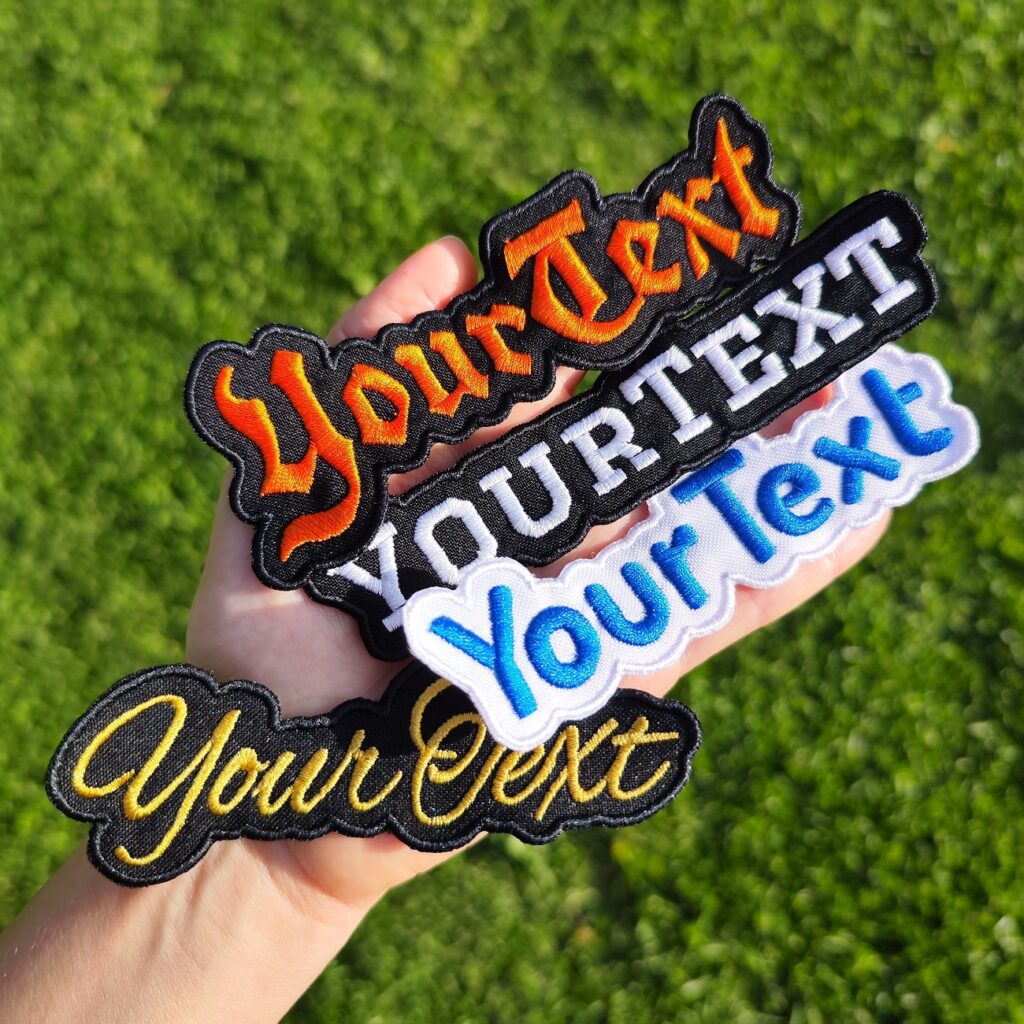
In custom patch production, client requests arrive sometimes without some variation of the phrase “3D puff embroidery”. Brand managers, procurement contacts, product developers, and creative directors use it routinely — as shorthand for patches that look premium, textured, and visually elevated rather than flat.
In the overwhelming majority of cases, it is not what they actually require. I will explain.
This is not a failure of briefing. It is a predictable consequence of social media terminology drifting away from production reality. “3D puff” has become an aspirational label for quality embroidery in general — decoupled from its precise technical meaning. For anyone ordering custom embroidered patches at a professional level, understanding the real distinction is not merely academic. It directly affects design feasibility, production costs (as technically puff with foam is much more expensive), edge quality, and the accuracy with which the finished patch represents your brand.
This article provides a technically grounded, practical explanation of both techniques — what they are, how they work, where each is appropriate, and why, in most professional patch briefs, well-executed satin stitch is the correct specification.
What Is Satin Stitch in Machine Embroidery?
Satin stitch is the foundational technique of professional patch embroidery. It consists of closely packed, parallel thread stitches laid side by side at a consistent angle, completely covering the substrate beneath. Executed correctly, the resulting surface is smooth, dense, and visually rich — with a characteristic sheen that reflects light directionally and gives the embroidery strong visual presence.
In custom patch production, satin stitch is the standard approach for lettering, logo fills, border elements, and any design component requiring clean definition, accurate colour rendering, and a professional finish. The thread coverage is total. There is no base fabric visible through the stitches. The edges, when properly digitized, are sharp and precise.
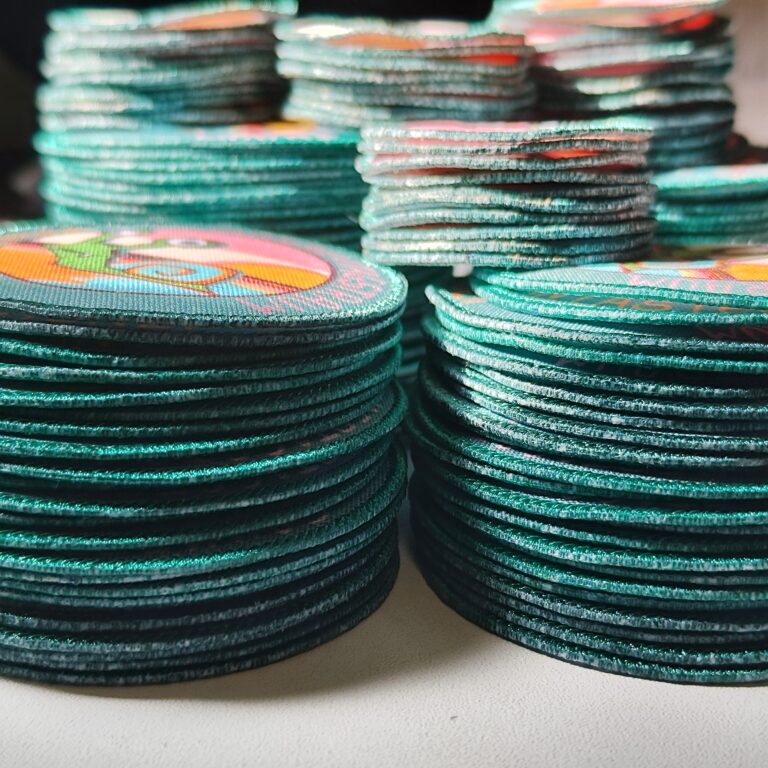
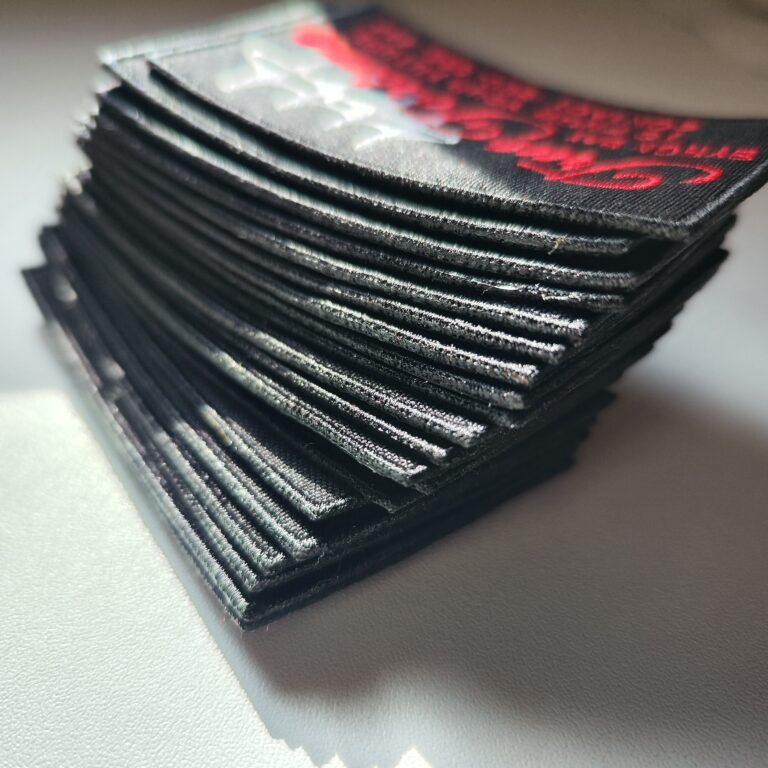
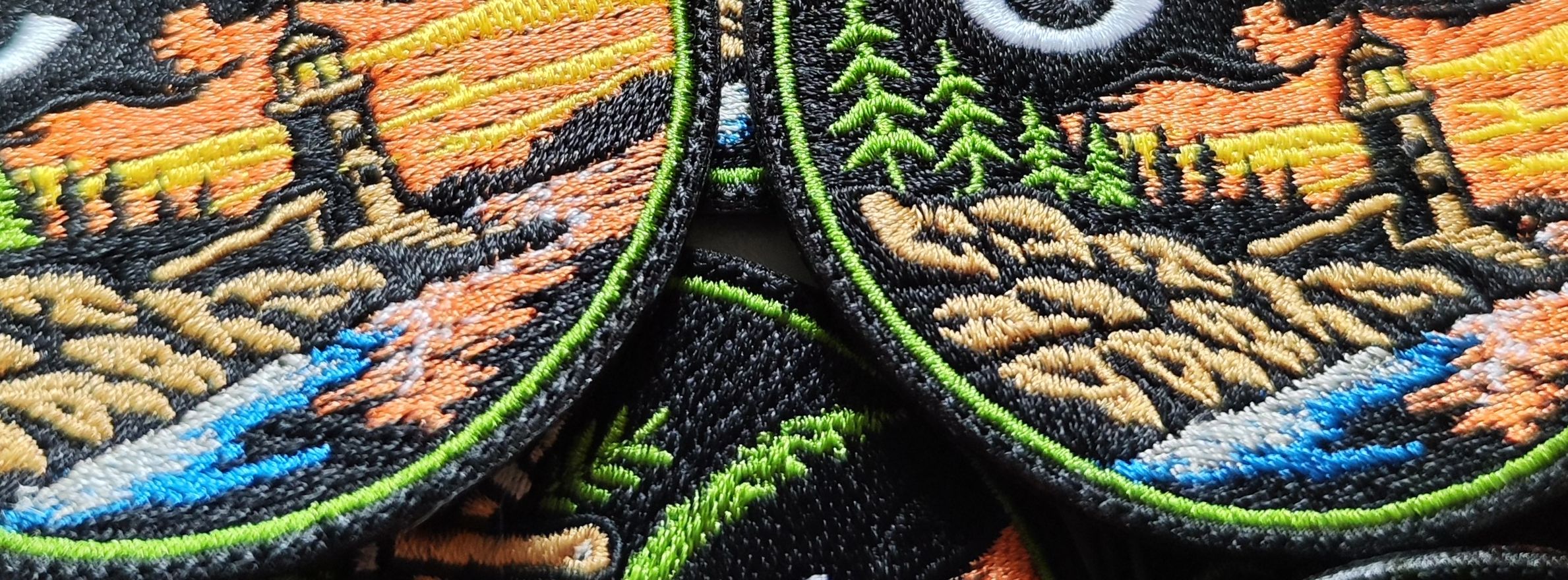
The aspect of satin stitch that surprises many clients unfamiliar with production specifics: a correctly produced satin stitch area is not flat. Because stitches accumulate in dense, layered passes across the backing material, the finished embroidered surface sits noticeably above the base. There is genuine physical elevation, tactile weight, and — under any directional light source — a dimensionality that reads clearly both in person and in product photography.
This elevated, textured quality is the standard result of professional satin embroidery on patches. It is not a special effect. It is not a workaround. It is simply what well-produced embroidery looks like — and it is, in nearly every case, precisely what clients are describing when they request a “3D effect” on their custom embroidered patches.
The Three Variables That Determine Satin Stitch Quality
Not all satin stitch is equal. The difference between embroidery that looks flat and unimpressive and embroidery that has genuine visual impact comes down to three production factors:
Digitizing precision. Digitizing is the conversion of artwork into machine-readable stitch instructions — covering stitch direction, angle, sequence, underlay structure, and density mapping. Poor digitizing produces satin fill that is gappy, directionally inconsistent, or poorly anchored. Expert digitizing, developed through years of production experience, produces satin that is tight, directional, and delivers maximum visual impact. This is the single most consequential variable in patch quality and the one most frequently underestimated by buyers sourcing on price alone.
Stitch density calibration. Density — the number of stitches per millimetre — must be calibrated precisely for each design, patch size, and thread colour. Insufficient density produces visible gaps and thin coverage. Excessive density causes thread build-up, distortion, and needle breaks during production. The correct density for a given design is not a default software value — it is a production decision that requires experience and judgement.
Thread specification. Professional patch production uses high-sheen polyester embroidery thread as standard. The sheen quality of the thread is a direct contributor to the dimensional appearance of the finished embroidery. Thread selection is a production decision with aesthetic consequences.
When all three of these variables are correctly managed, the result is satin stitch embroidery that is visually elevated, tactilely substantial, and commercially representative. It is the benchmark against which any specialist patch producer should be judged.
What Is True 3D Puff Embroidery?
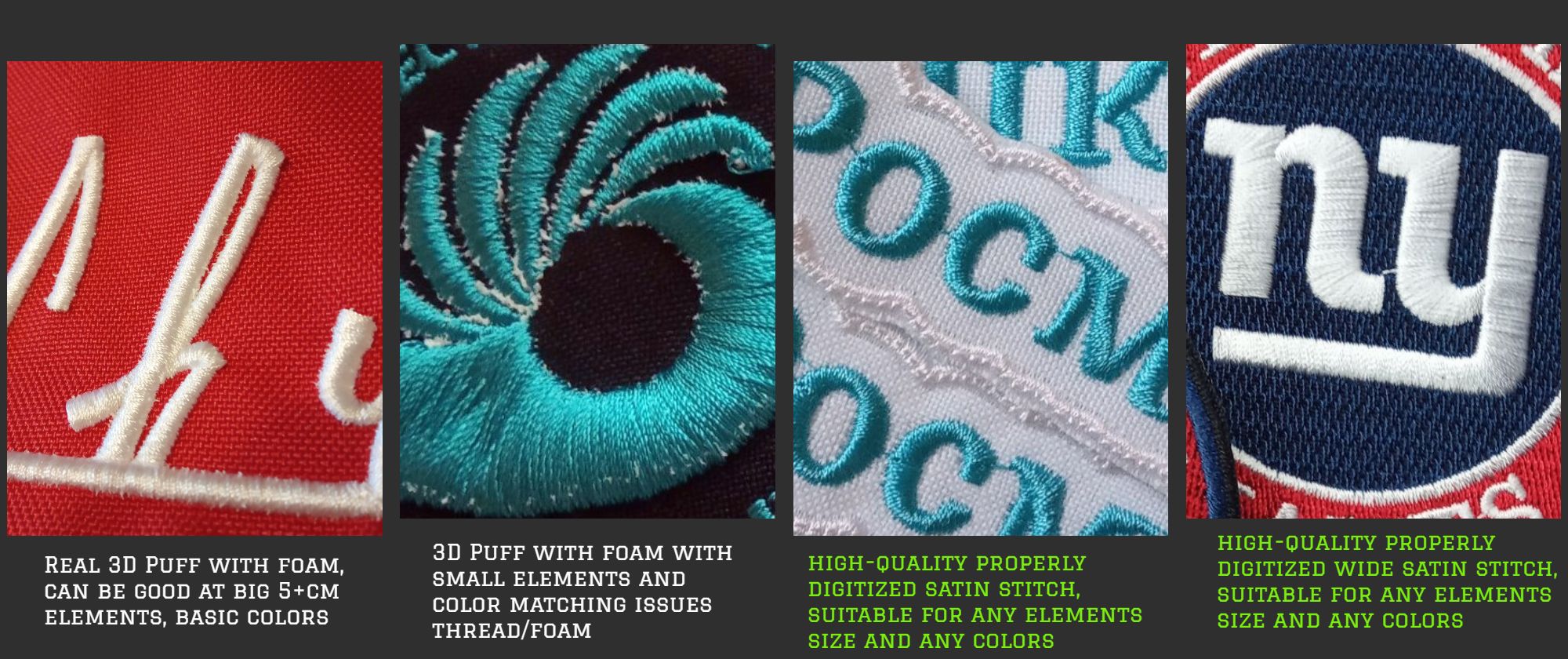
True 3D puff embroidery is a distinct production technique that involves a physical intermediate material: embroidery foam, sometimes referred to as puff foam. This is a sheet of compressible foam — typically between 3mm and 6mm in thickness — positioned on top of the patch substrate prior to stitching. The embroidery machine then stitches over the foam, with the thread compressing and enclosing it beneath. After stitching is complete, the excess foam outside the stitched boundary is removed — typically by tearing along the stitch line — leaving a foam-supported, physically elevated embroidered element.
The aesthetic outcome is genuinely different from standard satin stitch: elements produced with puff foam have a rounded, sculptural profile, rising substantially from the patch surface and casting a visible shadow at the edges. In the right application, the effect is bold and distinctive.
However, the technique operates within strict production constraints that are not always understood by clients requesting it.
The Production Constraints of True 3D Puff
Puff embroidery is not a quality upgrade applicable to any design. It is a specialist technique suited to a defined range of applications:
Minimum element size applies. Puff foam requires sufficient surface area to be held securely by the surrounding stitches. Elements narrower than approximately 12mm cannot be reliably produced with foam. Below this threshold, the foam cannot be controlled adequately during production and the finished edges will not be clean.
Design complexity and colors are severely restricted. Foam is a physical mass beneath the thread. It must match the design color. It also cannot conform to sharp internal angles, fine line detail, or closely spaced elements. Intricate logos, detailed artwork, and complex lettering are not candidates for puff technique. The geometry must be simple and the shapes must be bold.
Lettering requirements are specific. Block or bubble-style typefaces at large sizes can be successfully produced with puff. Serif typefaces, condensed or extended letterforms, and any text below a production-viable size cannot. Attempting puff on unsuitable lettering produces imprecise results that reflect poorly on the finished product.
Edge definition is inherently softer. The foam-removal process and the physical nature of the material mean that puff-embroidered edges will always be somewhat rounded rather than sharp. This is a characteristic of the technique, not a production defect. For briefs where crisp, defined edges are a brand requirement, this is a significant consideration.
Puff is applied to elements, not entire designs. It is technically and practically impractical to apply foam across an entire complex patch design. Puff is used selectively — on a logo mark, a large initial, a prominent numeral — as an accent within a design that is otherwise produced in standard satin stitch.
Where puff embroidery is genuinely appropriate — a large-format letterform on a sports patch, a bold icon on a fashion application, a standalone brand monogram — the technique can deliver a compelling result. The determining factor is always whether the design genuinely calls for it.
Why This Terminology Confusion Is So Pervasive
The conflation of “3D puff” with premium embroidery in general is not a recent phenomenon, but it has accelerated substantially with the rise of visual social media as the primary reference point for buyers.
The term has become an aesthetic descriptor, not a technical specification. On Instagram, TikTok, and across e-commerce product listings, “3D puff” is used to communicate that embroidery looks elevated, textured, and high-end — as opposed to thin, flat, or cheap. Sellers and content creators apply it to convey quality, irrespective of whether foam is involved. Buyers adopt it as the vocabulary available when briefing. Neither party is being inaccurate within the context of that communication — but the term arrives in production briefs carrying a meaning quite different from its technical definition.
High-quality satin stitch photographs as dimensional embroidery. A professionally produced patch under directional light looks raised, rich, and three-dimensional in product photography. When buyers save these images as references and present them with the brief, they are frequently looking at satin stitch. The “3D puff” label they attach is their interpretation of what they see, not a technical read of what was produced.
Price-driven production has set a low baseline expectation. Many buyers have encountered patches produced at the cheapest possible price point — thin thread coverage, minimal density, no underlay — that genuinely do look flat and insubstantial. The request for “something with a 3D puff effect” is a reaction to that experience. What they are actually describing is well-produced satin stitch embroidery.

Understanding this context allows producers to address briefs accurately without dismissing client vocabulary. The objective is to identify what result the client genuinely requires, clarify the technique that achieves it, and produce accordingly.
Identifying the Correct Specification for Your Custom Patch Project
The following framework provides a practical basis for determining whether a project requires standard satin stitch or genuine 3D puff production:
Does the design require physically foam-supported, sculptural elevation? If the intent is for specific elements to stand substantially off the patch surface with a rounded, three-dimensional profile — and those elements are large and simple enough to accommodate foam — then puff may be appropriate. Be prepared for the raised costs as it is additional machine and human operation.
Or does the patch design require embroidery that looks premium, textured, and visually elevated in product photography and in person? If the reference images show richly coloured, dense, shiny embroidery that appears dimensional — but there is no specific requirement for foam-supported physical protrusion — then expert satin stitch is the correct technique. This is the specification that will deliver the result with reasonable costs.
Does the design include elements under 20mm, fine line detail, or complex lettering? If so, puff embroidery is not a viable option for those elements regardless of the brief wording. The correct approach is high-density satin stitch with precision digitizing.
What are the edge quality requirements? If crisp, well-defined edges are a brand standard or a quality benchmark for the product, satin stitch consistently outperforms puff on this criterion.
In our production experience, the substantial majority of custom patch projects that arrive referencing 3D puff are correctly fulfilled with high-density satin stitch. The result meets or exceeds client expectations — because what clients are describing is precisely what good satin embroidery delivers.
What Separates Exceptional Satin Stitch from Average Production
For B2B buyers making procurement decisions — particularly for branded merchandise, corporate uniform programmes, or product lines where patch quality directly reflects the brand — this distinction carries real commercial weight. The difference between a patch that looks premium and one that looks mediocre is almost never the technique name on the production order. It is the standard of execution.
Digitizing as a Production Discipline
In-house digitizing by an experienced specialist produces materially better results than automated digitizing software or outsourced file preparation. We at Mottopatch are fanatic engineers, and we digitize the patch logic manually. Every design presents specific considerations: stitch angle relative to design geometry, underlay type for the patch backing material, density adjustments for dark versus light thread colour combinations, pull compensation to maintain edge accuracy at production scale. These are not software defaults. They are production judgements that accumulate through years of embroidery experience.
Density as a Quality Indicator
Stitch density is one of the most reliable indicators of patch quality and one of the most frequently compromised in volume production. Correctly dense satin stitch has the tactile weight and visual richness that buyers associate with premium embroidery. Under-density satin is the primary reason patches look flat — and the primary driver behind buyers requesting “something more 3D” when reordering from a previous unsatisfactory supplier.
Specifying and producing correct density requires understanding how thread behaves at different scales, in different colour combinations, and on different backing materials. It is a technical discipline, not a machine setting.
Machine Calibration and Production Consistency
Even with accurate digitizing, inconsistent machine tension, incorrect hooping pressure, or files run at inappropriate speeds will introduce variation in finished quality. Professional patch production operates with calibrated equipment, consistent setup protocols, and quality inspection at each production stage. For B2B orders where patches are applied to garments or products at scale, consistency across the run is a functional requirement.
Finishing Standards
Patch finishing — trimming, backing application, edge treatment, and final inspection — is the last determinant of whether a production run delivers consistent quality across all units. It is also the stage that differentiates producers with genuine craft standards from those optimising for volume throughput alone.
When 3D Puff Embroidery Is the Right Specification
There are genuine applications for true 3D puff embroidery, and we produce it where it is correctly specified:
Sports and team premium patches with large numerals or initials. A bold squad number or player initial produced in puff foam on a kit patch delivers a distinctive, high-relief look well-suited to premium sportswear applications.
Fashion and streetwear applications. Where the sculptural, oversized quality of foam-supported embroidery is a deliberate design statement aligned with the product aesthetic.
Simple, large-format brand marks. Where a single clean shape — a logo icon or monogram — benefits from genuine physical elevation and the design geometry is appropriate for foam production.
Accent elements within a satin stitch design. A hybrid approach where the primary design is satin stitch and one specific element is treated with puff for a focal point accent.
In each case, the technique is selected because it genuinely serves the design brief — not because the terminology appeared in the original request.
A Procurement Note for B2B Buyers and Brand Managers
For organisations sourcing custom embroidered patches for corporate uniform programmes, branded merchandise ranges, or retail products — particularly across EU markets — the clarification set out in this article has direct procurement implications.
A brief submitted with “3D puff embroidery” as the specification will be interpreted differently by different producers. Some will apply foam regardless of design suitability, charge a corresponding premium price, and deliver a product with imprecise edges and limited design fidelity. Others will interpret the instruction correctly, apply the technique where appropriate, and default to expert satin stitch where it is the better solution.
You might be interested in pricing add-on when requesting 3D puff foam embroidery? Typically +50-60% as it comes with extra machine and human operations.
As a specialist EU-based producer working directly with procurement and brand teams, our process is to review every brief at artwork stage, confirm the appropriate technique for each design element, and provide written production notes with every order. Pre-production samples are available for all wholesale B2B clients prior to full production runs.
Technique Comparison: High-Quality Satin Stitch vs True Foam 3D Puff
| Criterion | Pro Satin Stitch | Foam 3D Puff |
|---|---|---|
| Production method | Densely packed parallel thread stitches | Foam substrate stitched over and enclosed |
| Elevated effect | Natural, from thread density and layering | Physical, foam-supported protrusion |
| Design complexity | High — handles fine detail and small elements | Low — requires large, simple shapes only |
| Edge definition | Crisp and precise | Rounded and softer |
| Minimum viable element size | ~4–5mm (text); varies by design | ~15mm+ |
| Best application | Logos, lettering, detailed designs, most patches | Bold standalone elements, large letterforms, premium price level |
| Visual result with expert execution | High-gloss, dimensionally rich, strong sheen, premium look | Sculptural, fancy vibe, prominent physical elevation |
| Correct interpretation of most “3D effect” briefs | In the majority of cases | Specific, qualified applications |
Conclusion: Specifying the Right Technique for the Right Result
The terminology gap between “3D puff embroidery” as a client brief term and 3D puff embroidery as a production technique represents one of the most consistent points of misalignment in custom patch procurement. It is a gap that costs buyers money, produces suboptimal results, and — when correctly addressed — resolves straightforwardly.
For the vast majority of professional patch projects, the requirement is for custom embroidered patches with a premium 3D effect achieved through expert satin stitch: high-density, precision-digitized, correctly tensioned, and quality-controlled through every stage of production. This is not a compromise specification. It is the standard of professional patch embroidery — and when produced to that standard, it is exactly what the brief is asking for.
Where true 3D puff embroidery genuinely serves the design, we produce it. Where it does not, we advise accordingly. Either way, the result is a patch that accurately represents your idea and your brand.
Mottopatch is a specialist custom embroidered patch workshop with over 10 years of professional production experience, serving B2B clients across the European Union. All digitizing and production is handled in-house.
Frequently Asked Questions
Yes. A correctly digitized, high-density satin stitch creates a genuinely elevated surface. The physical accumulation of thread across the backing produces both tactile substance and visual depth that reads as clearly dimensional — in person and in photography. The majority of patch briefs requesting a 3D effect are accurately and professionally fulfilled by expert satin stitch.
Satin stitch elevation results from thread accumulation — stitches layered tightly across the substrate. True 3D puff elevation is produced by a foam insert beneath the thread, creating a more pronounced and rounded protrusion. The foam-supported effect is more sculptural; the satin effect is more precise and edge-accurate.
No. Puff foam requires large, simple shapes with bold outlines to function correctly. Fine line detail, small text, intricate artwork, and sharp internal angles are not compatible with puff technique. These elements must be produced in satin stitch.
Directional lighting on dense satin stitch creates strong highlight and shadow contrast that reads as very dimensional in photography. Additionally, much of what is commercially labelled “3D puff” on social media and in product listings is, technically, high-density satin stitch — the term is used as a marketing descriptor rather than a precise production specification.
Always yes. Puff embroidery requires foam material with color matching per project, additional production setup, additional operations both for machine and humans, and typically runs at slower machine speeds. However, as puff is only appropriate for specific design elements rather than full designs, most patches — including premium, complex designs — are produced entirely in satin stitch without any cost penalty.
The primary criteria are element size (minimum approximately 15mm), shape simplicity, and whether the design genuinely requires foam-supported physical elevation. Submitting your artwork for a technical review prior to placing an order is the recommended approach. We provide technique recommendations as part of our standard pre-production consultation.
In most cases, those patches are produced in high-density satin stitch embroidery. The label “3D puff” is applied loosely across the industry and in consumer markets to describe any patch embroidery that appears elevated and premium. A raised, shiny, textured custom embroidered patch with a visible 3D effect is, in the majority of cases, the result of expert satin production rather than puff foam.
Yes. Pre-production samples are standard practice for B2B clients with higher volume orders. For lower volumes we always provide a digital patch preview. We strongly recommend sample approval prior to full large production runs, particularly for new designs or clients sourcing from anywhere for the first time.
We are a specialist custom patch workshop based in the EU, supplying B2B clients across the European Union. We work directly with brand teams, procurement contacts, sports organisations, and product companies.
We work with any formats, even drawing or AI mockups you made yourself as we do manually digitize the artwork for proper engineering-backed patches. You may hear that some producers accept only vectors, in most cases that is a sign of fast software auto-digitizing. But of course we are also glad, when you have vectors. Vector source files (PDF, SVG) are the preferred format. High-resolution raster files (PNG, JPEG) are also great. All digitizing is handled in-house. Your design is never handed over to 3rd parties.