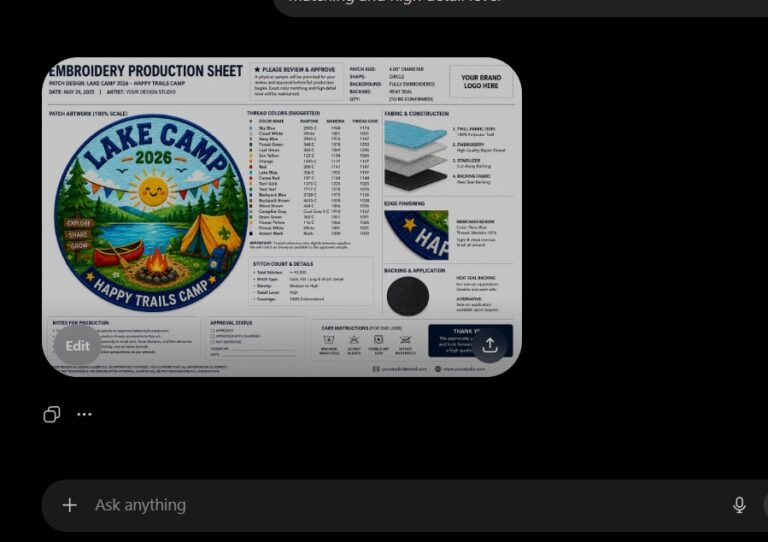
based on 5000+ sales. Wholesale discount applied automatically any 10+ pcs
Why embroidered patch prices differ
Not all embroidered patches are the same — even when they look similar at first glance.
Price differences usually come from production parameters, not from margin alone.
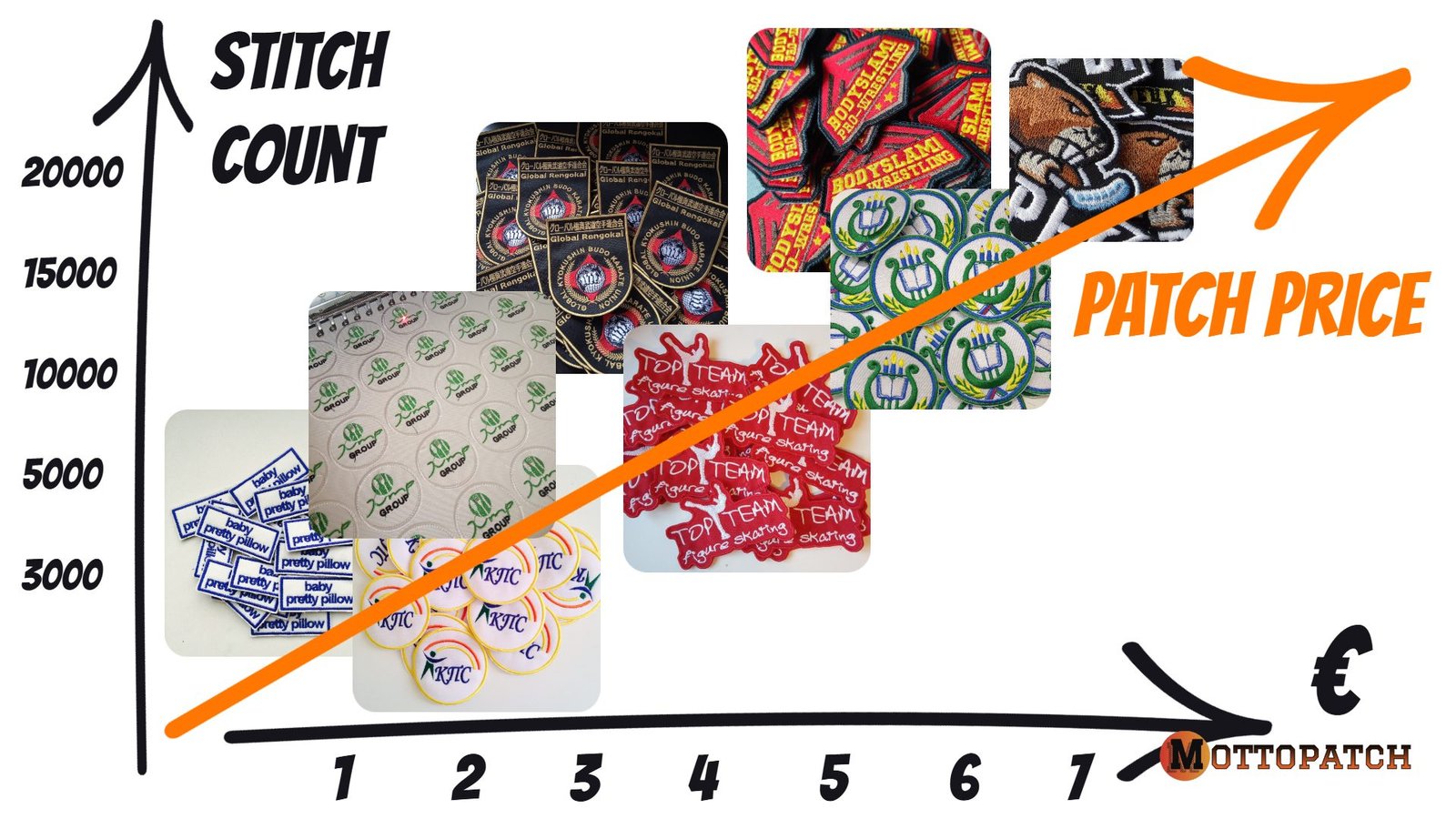
This post explains what actually affects patch pricing, so you can make an informed comparison. In addition I made this chart visualization, hope it helps.

What influences the price of an embroidered patch
1. Stitch coverage & density
Patches with full stitch coverage and high density require significantly more machine time and thread than simplified designs. I would say you’d better look into not coverage, but stitch count. When you get a patch preview from a supplier – ask how many stitches and ask to send you a software proof, that can protect you from typical situations when you get a high stitch preview and then the design is simplified for production to get less stitches for the real embroidery batch run. As a result, your patches may differ from the digital preview significantly. If you are ordering 100+ pcs – ask for a sample stitches and photo send, you will then be able to compare what you were promised vs what you got.
Many advertised “from €1–2” prices apply only to low stitch density patches. What are the ranges? Well, for a decent patch of 8cm circle I would assume 5000 stitches to be a very low count, while 17000 stitches to be a high level thread coverage.
Here is a small embroidery quiz for you, try to guess yourself stitch count, and hover over to see the range:
 9000 stitches First published here on July 23rd 2024. embroidered craft by Natalie Mottopatch and Aleksandr I. is licensed under Creative Commons Attribution-NonCommercial-NoDerivatives 4.0 International. To view a copy of this license, visit https://creativecommons.org/licenses/by-nc-nd/4.0/
 18000 stitches © Mottopatch, 2024. Licensed under CC BY-NC-ND 4.0. This image is protected under copyright. Commercial use and modifications are strictly prohibited. Unauthorized use will result in a copyright infringement report.
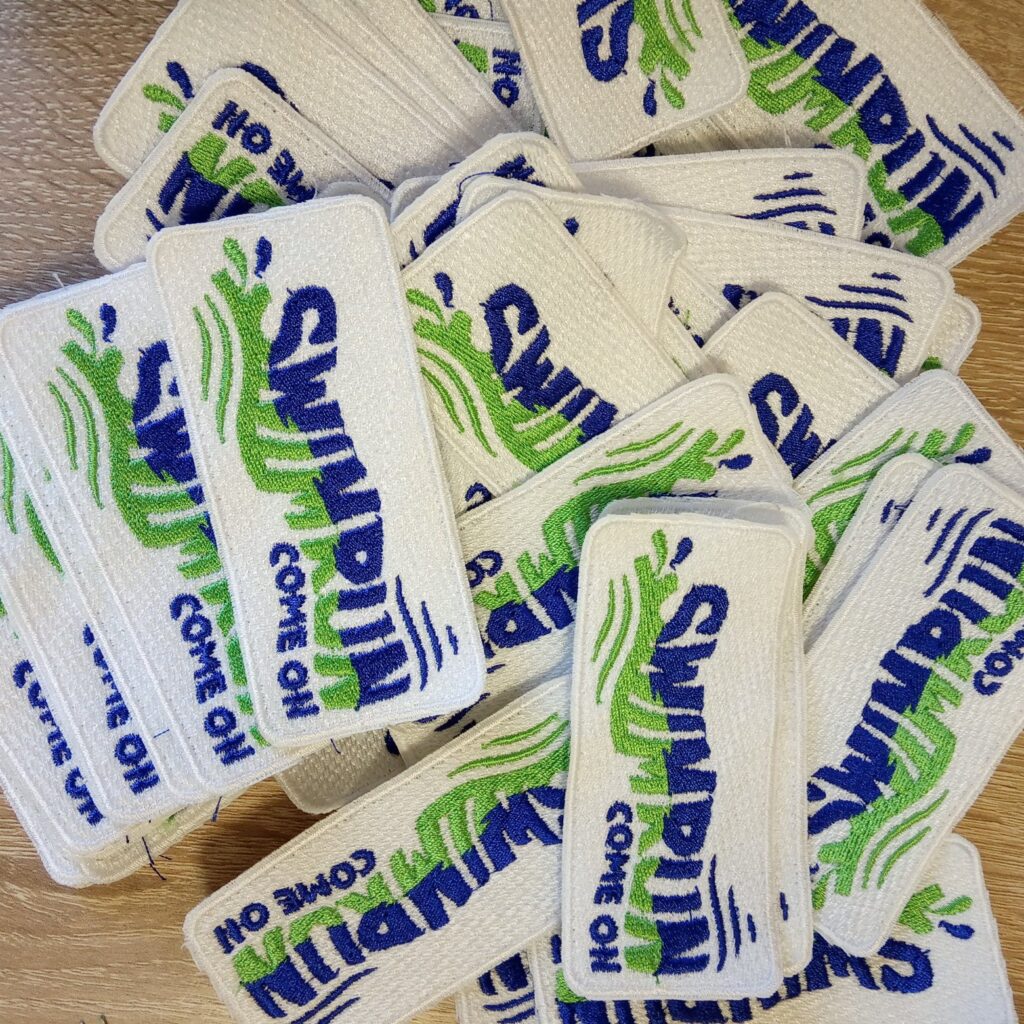 11000 stitches © Mottopatch, March 2024. Licensed under CC BY-NC-ND 4.0. This image is protected under copyright. Commercial use and modifications are strictly prohibited. Unauthorized use will result in a copyright infringement report.
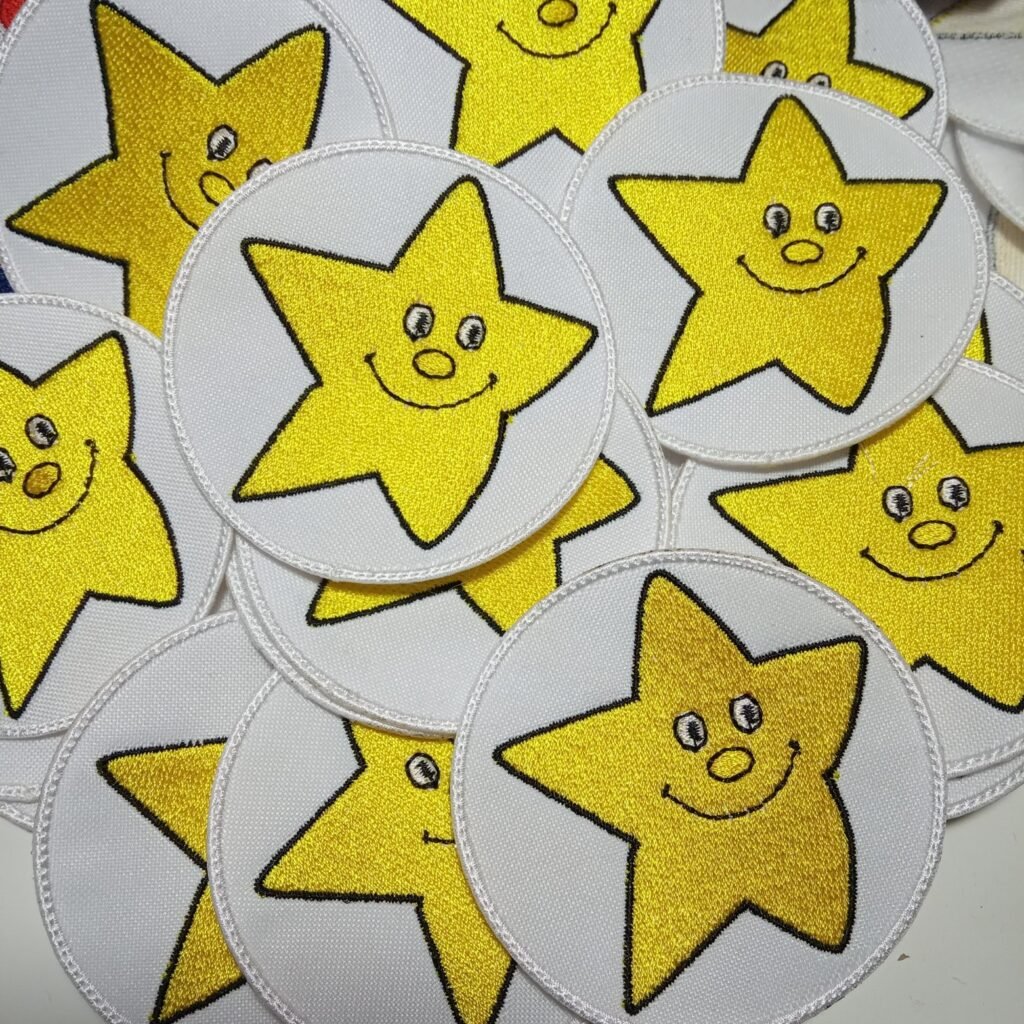 8000 stitches
 5000 stitches
 3000 stitches © Mottopatch, Feb 2025. Licensed under CC BY-NC-ND 4.0. This image is protected under copyright. Commercial use and modifications are strictly prohibited. Unauthorized use will result in a copyright infringement report.
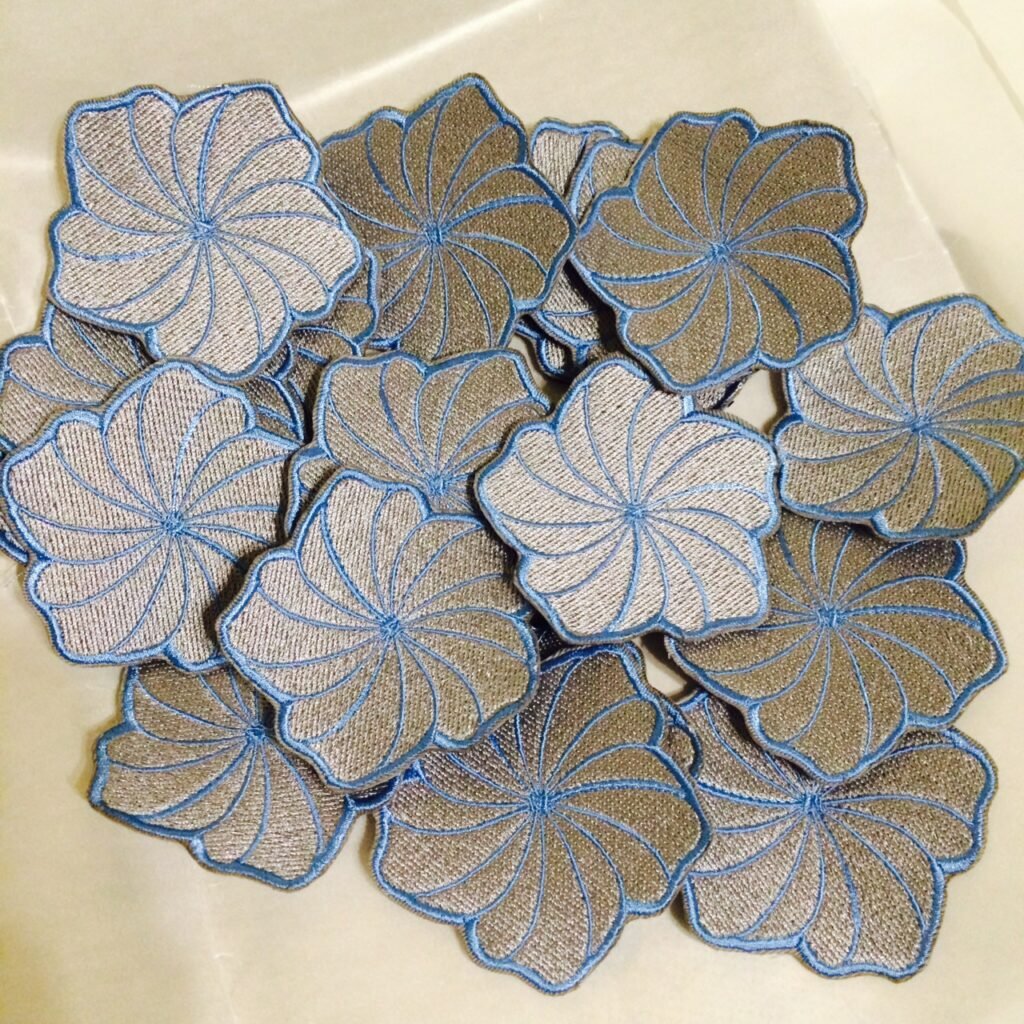 9000 stitches
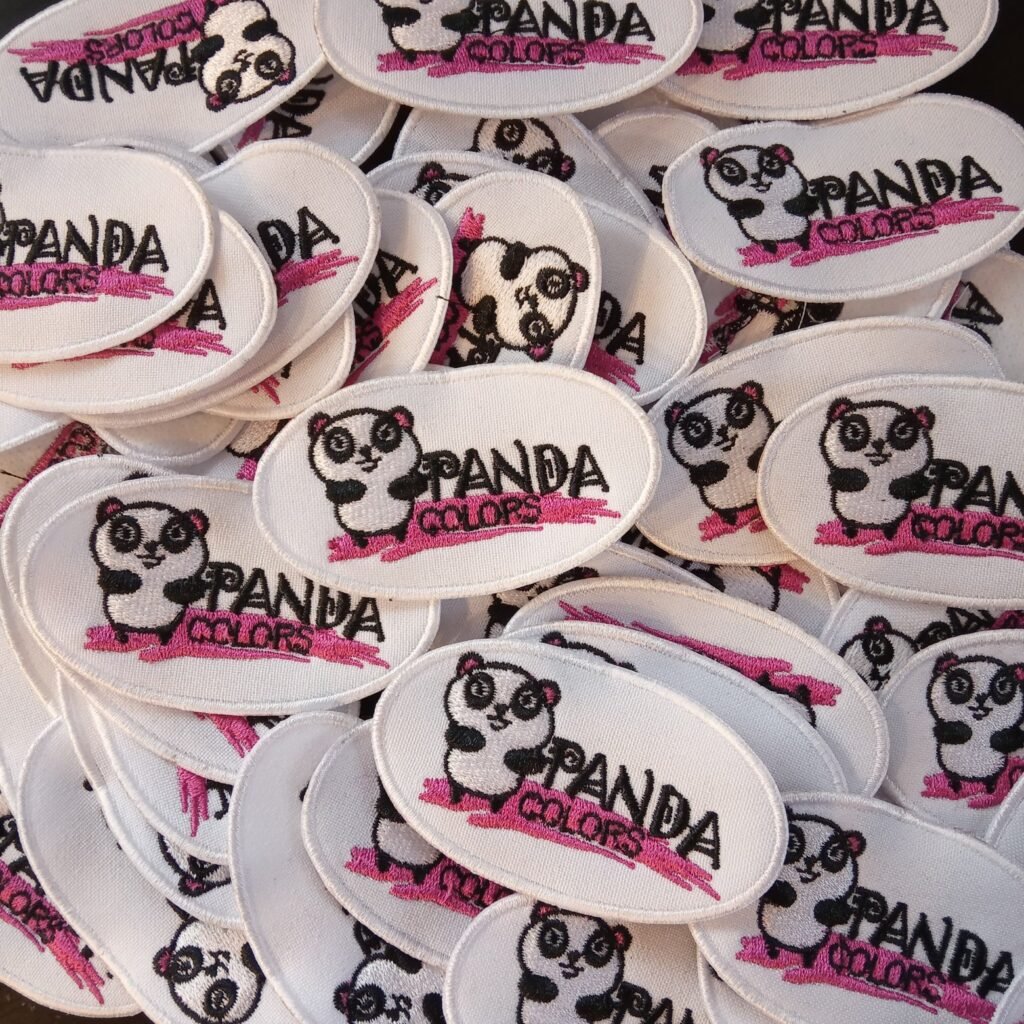 7000 sticthes
 14000 stitches
 © Mottopatch, 2024. Licensed under CC BY-NC-ND 4.0. This image is protected under copyright. Commercial use and modifications are strictly prohibited. Unauthorized use will result in a copyright infringement report.
2. Detail level
Fine text, small elements and clean edges increase digitizing complexity and production time.
Highly detailed logos cannot be produced at the same cost as flat, minimal designs. What is mean by detail level? All the tiny lettering that yes matters a lot, the black contour around an element to highlight the curve line, the face elements, color shades.
3. Durability for workwear
Professional patches for uniforms are designed to withstand:
- frequent washing
- friction
- long-term use
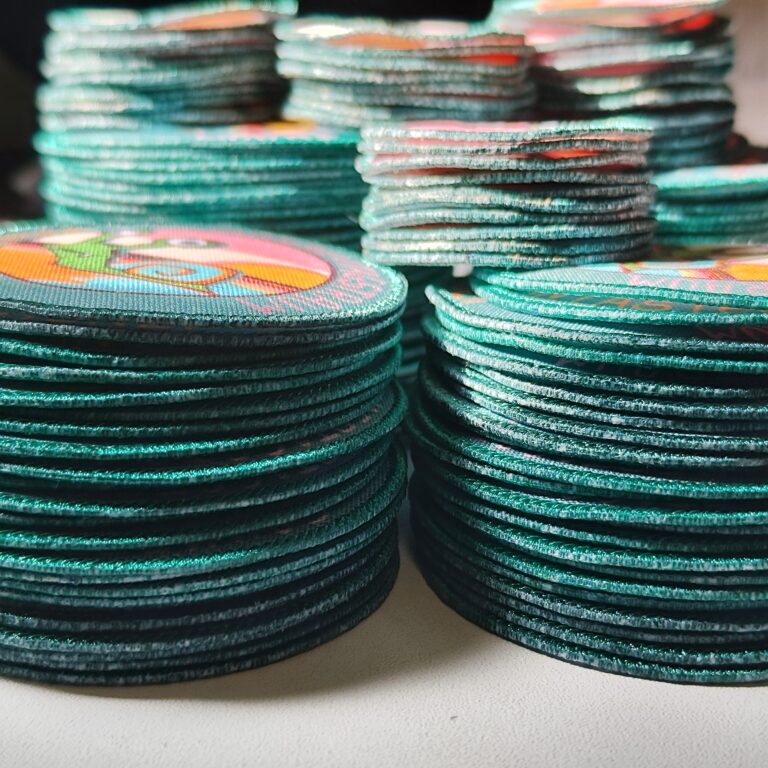
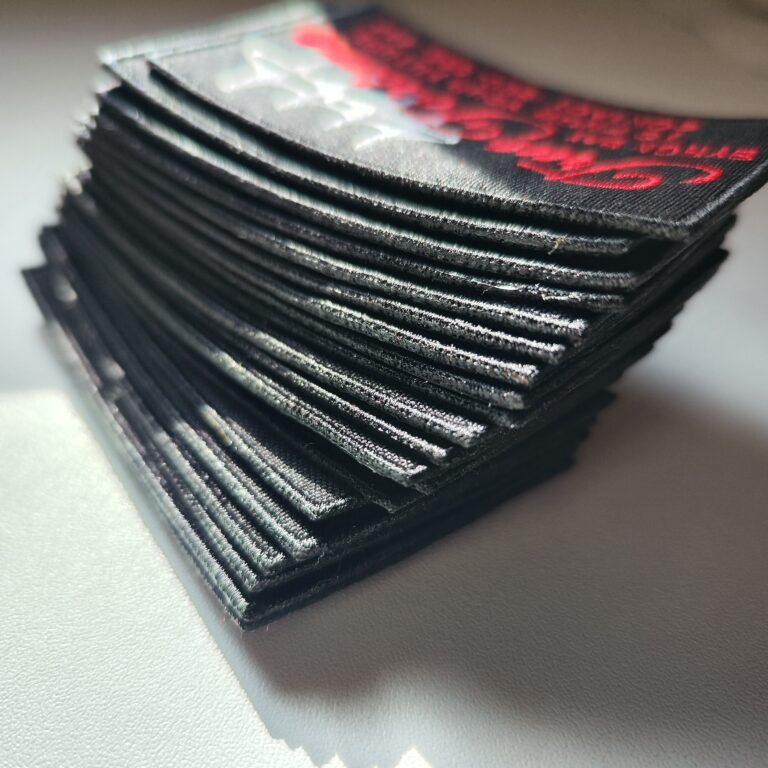
This requires stronger backing, tighter stitching and proper edge finishing. Sounds boring, but matters a lot with time. Our clients usually say the patches are just sew on to a new uniform from an old one with no issues, still look great. Not my words.
4. Quantity & setup
Prices are always influenced by:
- order quantity
- setup / digitizing work
- repeatability
Very low unit prices usually apply only at high volumes with minimal setup. Repeatability is important, you may be very surprised to receive a worse quantity for your second order because your supplier might be outsourcing the service to other real manufacturer this time.
5. Transparency of offers
Some low advertised prices:
- exclude setup costs
- exclude backing upgrades
- exclude design previews and sample adjustments
- change after artwork review – oh no.
Always compare reviews online and final quoted prices, not headline marketing numbers. By the way, read our reviews if you wish to.
“€1 patch” vs professional embroidered patch — what’s the difference?
| Feature | “From €1” offers | Professional patches |
|---|---|---|
| Pricing logic | Headline marketing | Final quoted price |
| Minimum quantity | Very high | Flexible |
| Stitch coverage | Partial | Full or high % |
| Density | Low | High |
| Edge finishing | Basic | Reinforced |
| Wash resistance | Limited | High |
| Backing | Basic | Multiple options |
| Logo accuracy | Approximate and can be changed on the go | Accurate with samples |
| Intended use | Casual / promo / individuals | Workwear & uniforms |
| Long-term cost | Replacements | Reusable |
How we price our patches
Our pricing is based on:
- stitch coverage and color changes
- uniform-grade durability
- production time per patch
- repeatable quality for reorders
This ensures consistency and long-term value for professional use.
If you’d like, we’re happy to prepare a quote. Or you can use self-service Price Calculator
Choosing patch supplier
If you’re comparing offers, make sure you’re comparing the same production parameters and customer reviews online.
We’re always glad to explain what’s included in our quotations.