based on 5000+ sales. Wholesale discount applied automatically any 10+ pcs
From AI Mockup to Real Embroidery: Why Complex Patch Designs Need Adaptation
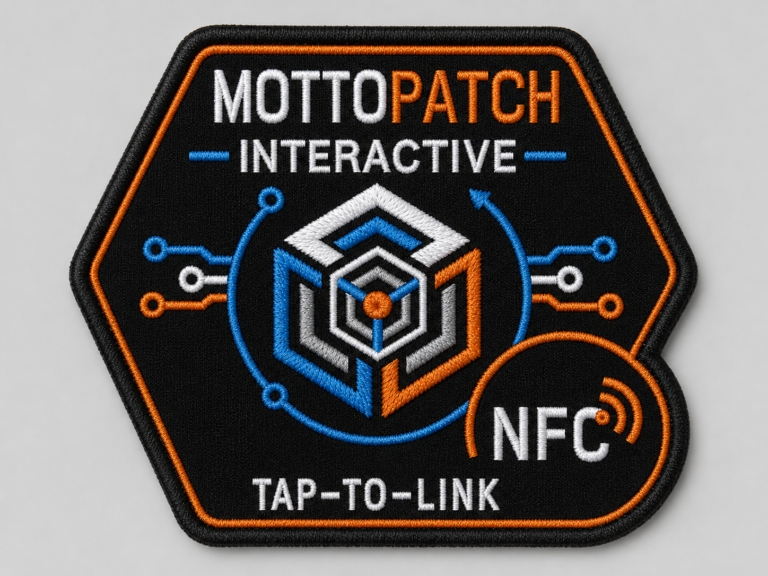
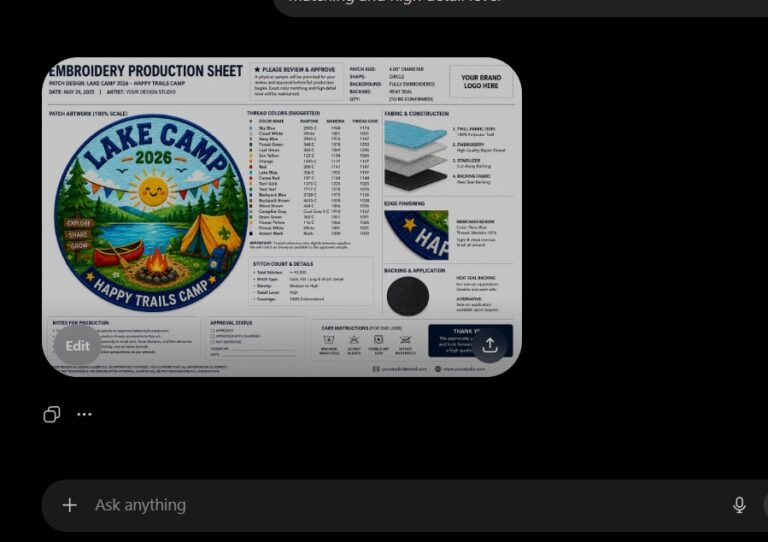
AI tools can create beautiful patch concepts. They can depict complex mechanisms and machines, rich collages, portraits, landscapes, coats of arms, metallic reflections, tiny letters, shadows, textures, and dozens of fine details in a single, stunning image.
But there is one important thing to understand:
An AI patch mockup is not an embroidery file.
It is a visual concept. A good starting point. A way to show the mood, composition and idea of the patch. But before this image can become a real embroidered patch, it must be translated into the physical language of machine embroidery. ideally this should be done not by a generic designer, but by people who actually run the embroidery machines daily, otherwise the result is again nothing more than a nice mockup.
Embroidery is not made from pixels. It is made from thread.
Embroidery Is a Physical Construction
An AI-generated image can contain thousands of colors, tiny shadows, soft gradients, and photographic details. Embroidery works differently.
A real embroidered patch is built from:
-thread thickness;
-stitch direction;
-stitch density;
-filled areas;
-satin borders;
-simplified shapes;
-fabric stability;
-machine movement.
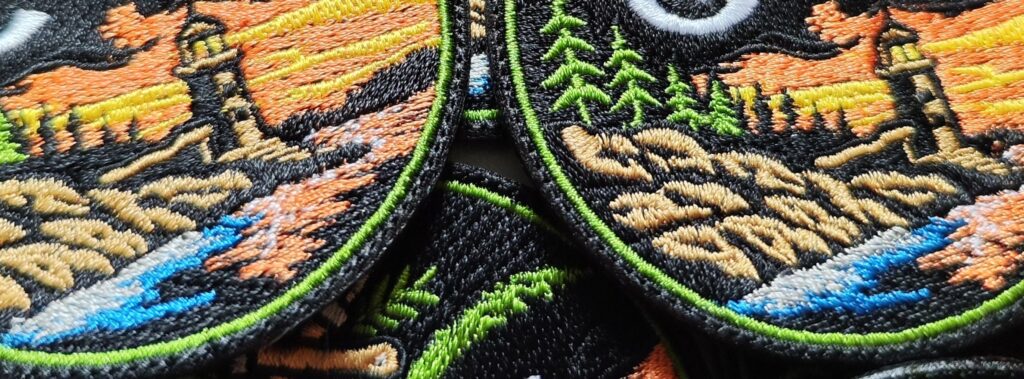
This means that every small detail must be physically possible to stitch. If a line is too thin, it may disappear. If text is too small, it may become unreadable. If a design has too many gradients or tiny textures, they must be simplified into clear embroidered areas.
This is not a weakness of embroidery. This is the nature of the material. And the beauty of this type of production artwork.
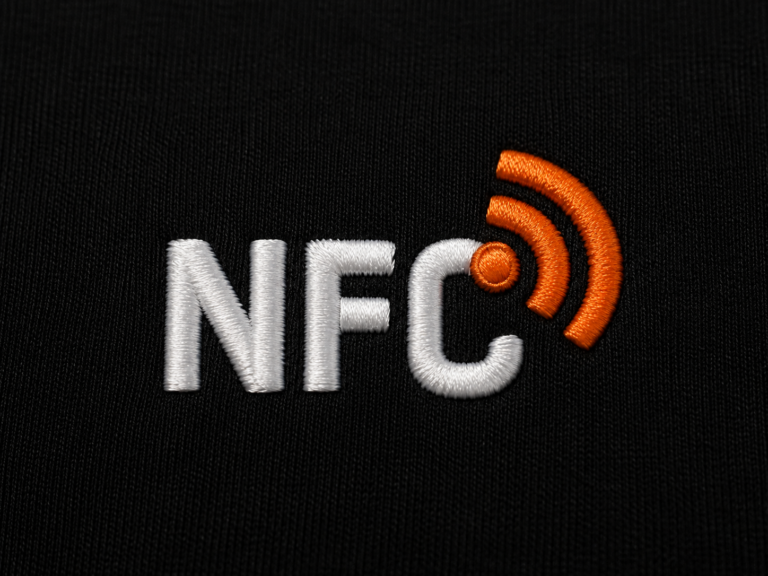
Embroidery has its own beauty: thread shine, texture, relief, depth, tactile surface and a premium textile feeling. But to get a good result, the design must respect the technology.
Three Different Stages of a Patch Design
When working with a complex patch, it helps to separate three different images.
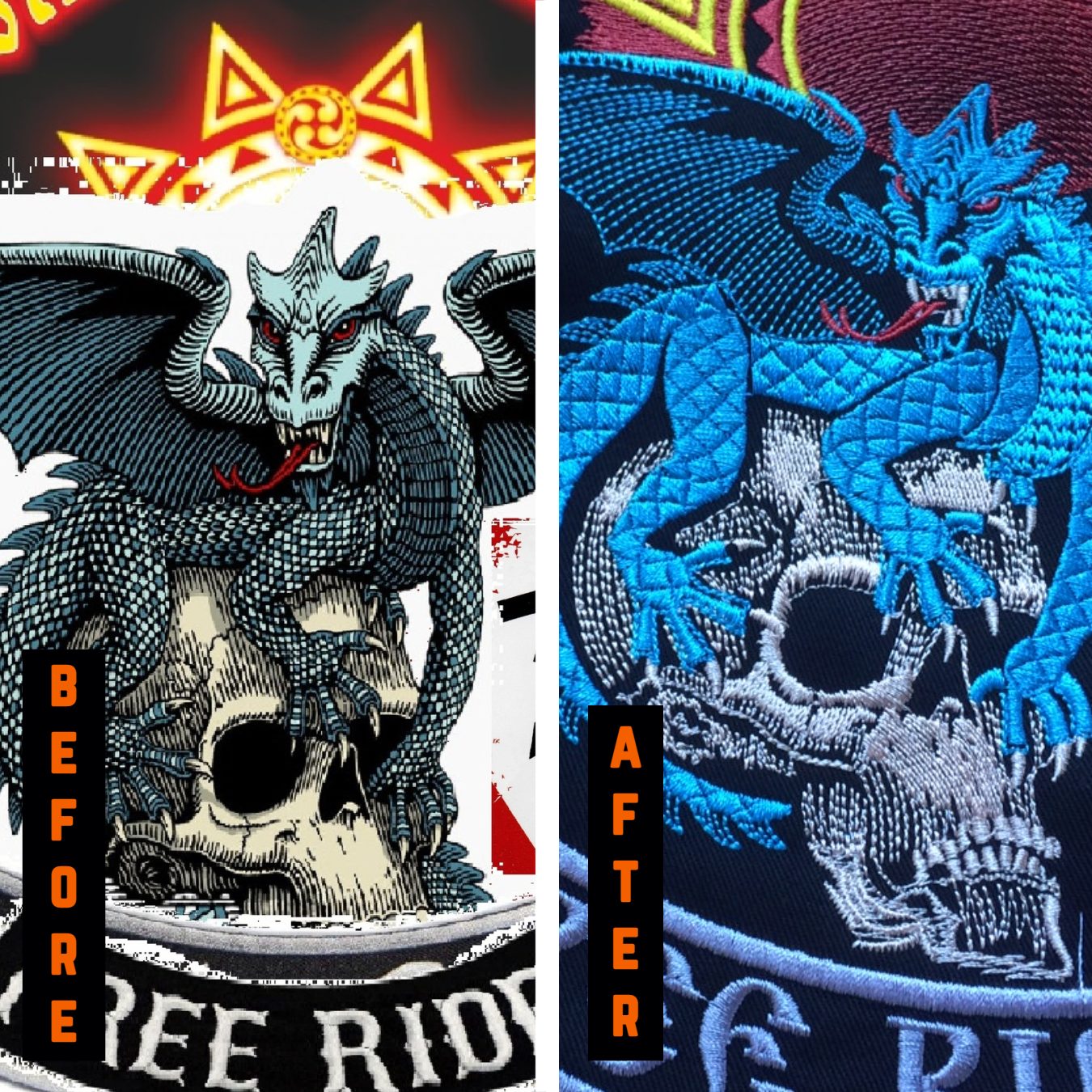
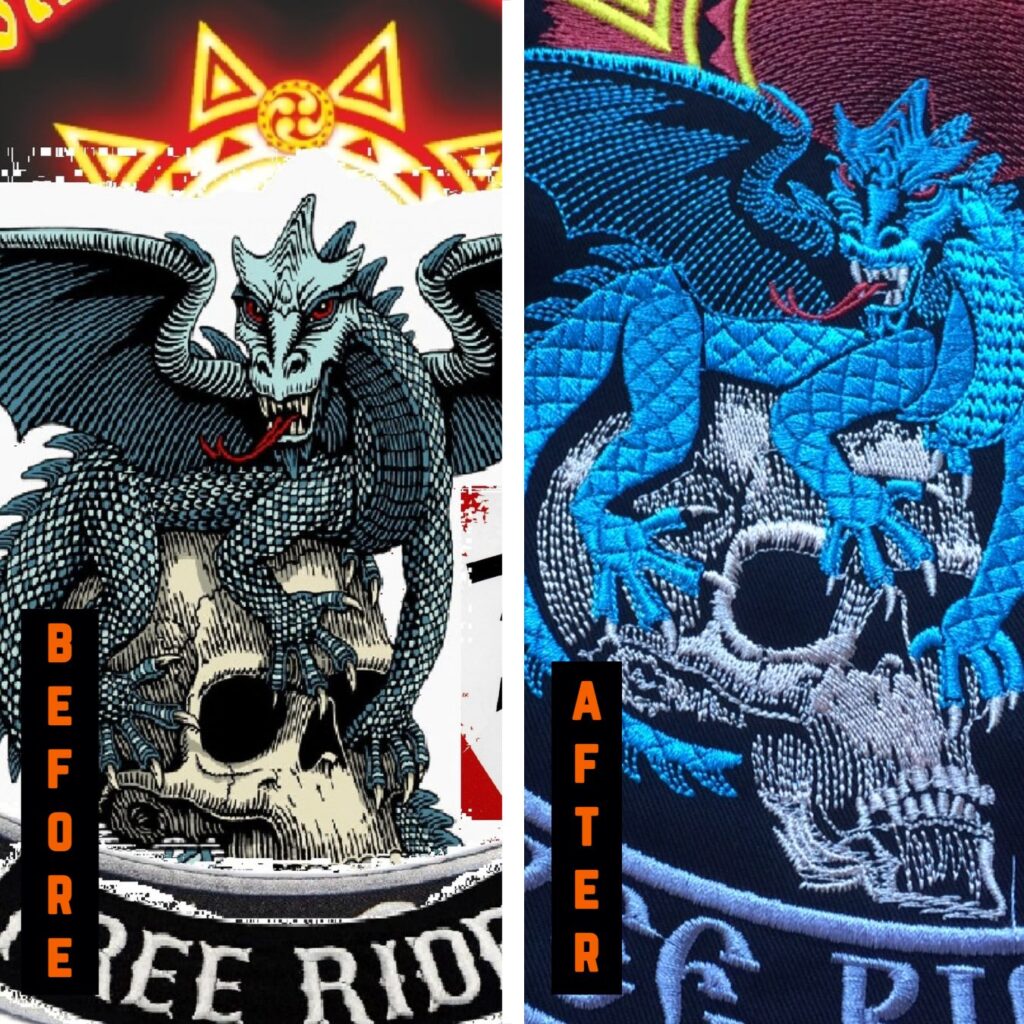
| 1. Client Mockup or AI Concept | 2. Embroidery Adaptation | 3. Stitch Program Preview |
| This is the first visual idea. It may be very detailed, emotional and realistic.It shows what the client wants to communicate: a vehicle, a person, a symbol, a team, a place, a story or a brand identity.But at this stage, the design may still contain elements that are too small or too complex for embroidery. | This is where the design becomes more realistic for production.The main idea is preserved, but the artwork is simplified:tiny details are removed or enlarged; gradients become solid color areas; thin lines become stronger; textures are reduced; small text is adjusted; important shapes are made clearer; color count is controlled. This stage is not about making the design worse. We are not reducing the design. We are making it stitchable. A good embroidery adaptation keeps the character of the original idea, but makes it possible to produce as a real patch. | The stitch program preview is a technical production view. It often looks less emotional than the original mockup.This is normal.The stitch preview shows how the embroidery machine will build the patch: stitch types, directions, order, density and borders. It is not meant to look like a polished illustration. It is a production file.A good stitch program may look simpler than the original image because it is no longer an idea — it is a real manufacturing plan. |
What Usually Changes During Embroidery Adaptation?
For complex patch designs, these changes are common:
| Original design element | Embroidery adaptation |
|---|---|
| Tiny text | Enlarged, simplified or removed |
| Gradients | Replaced with solid thread colors |
| Photo-like shadows | Converted into larger stitch areas |
| Thin lines | Thickened or simplified |
| Small mechanical details | Reduced to key shapes |
| Complex fabric textures | Recreated with stitch direction |
| Too many colors | Reduced to a practical thread palette |
The goal is not to copy every pixel. The goal is to create a strong embroidered patch that looks clean, readable and intentional.
Size Matters
One of the most important rules is simple:
If the patch size stays small, the design must become simpler.
If the design must stay detailed, the patch must become larger.
A large back patch can hold more detail than a small sleeve patch. A 30 cm patch gives much more space for shapes and stitch transitions than a 6 cm patch.
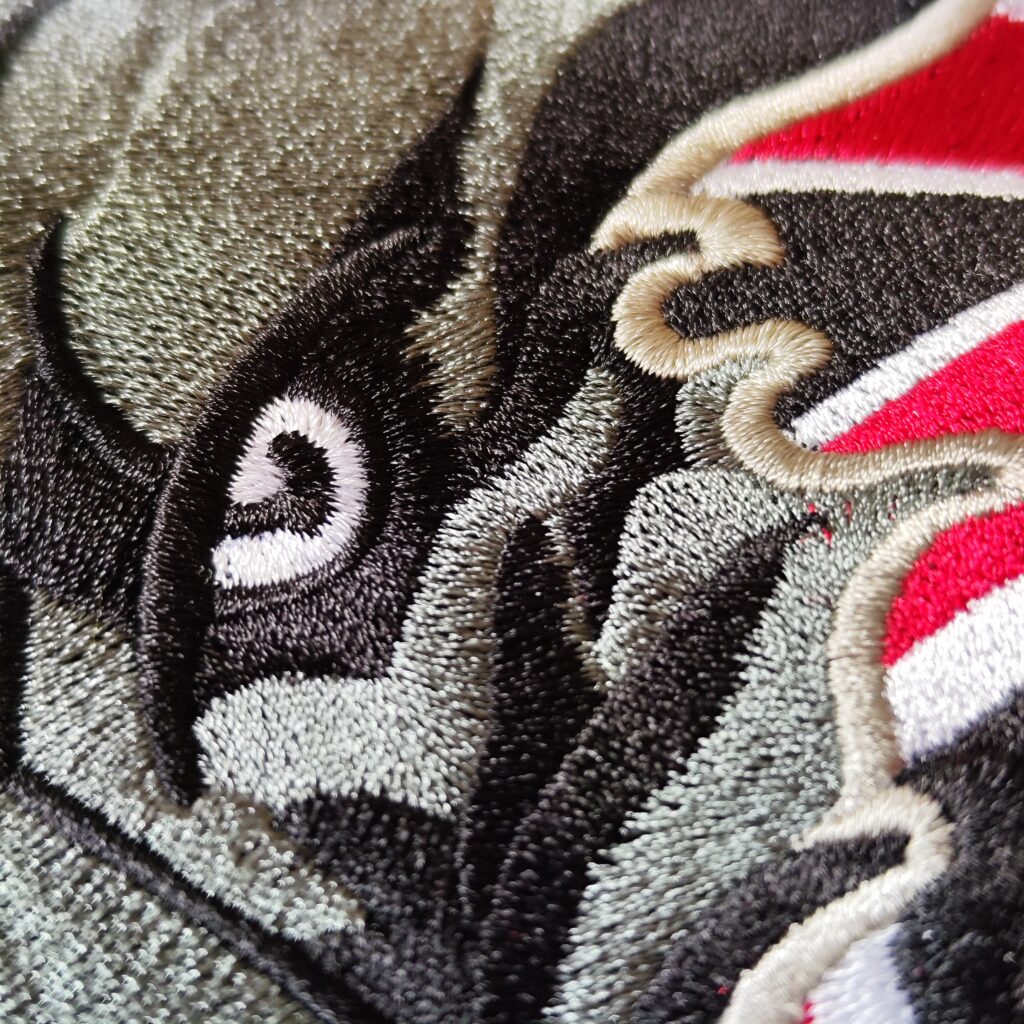
This is why the same design may work well at one size and fail at another.
When Full Embroidered Custom Patch Is the Best Choice
Full embroidery is still the best option for many types of patches.
It works especially well for:
- bold logos;
- school emblems;
- name patches;
- club patches;
- military-style patches;
- workwear patches;
- simple symbols;
- strong typography;
- premium tactile designs.
If the design is built from clear shapes, readable text and controlled colors, embroidery gives a result that printing cannot fully replace: real thread texture, shine, relief and a rich textile surface.
What If the Design Must Keep Many Details?
Sometimes the original artwork depends on very small details, realistic textures, many colors or photographic elements.
For example:
- portraits;
- pets;
- vehicles;
- landscapes;
- AI-generated artwork;
- detailed coats of arms;
- small text;
- complex illustrations created with ai.
In these cases, full embroidery may require too much simplification.
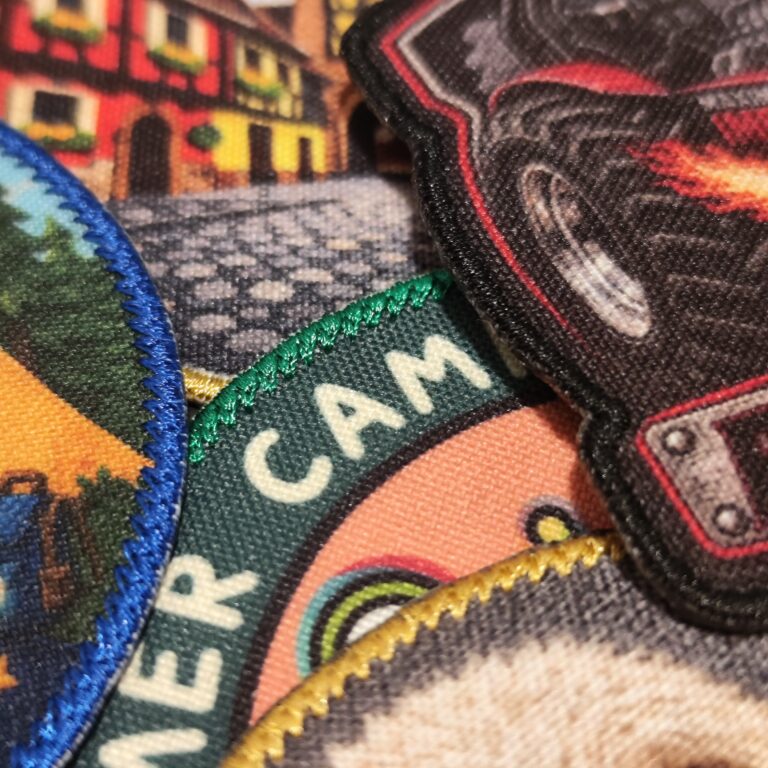
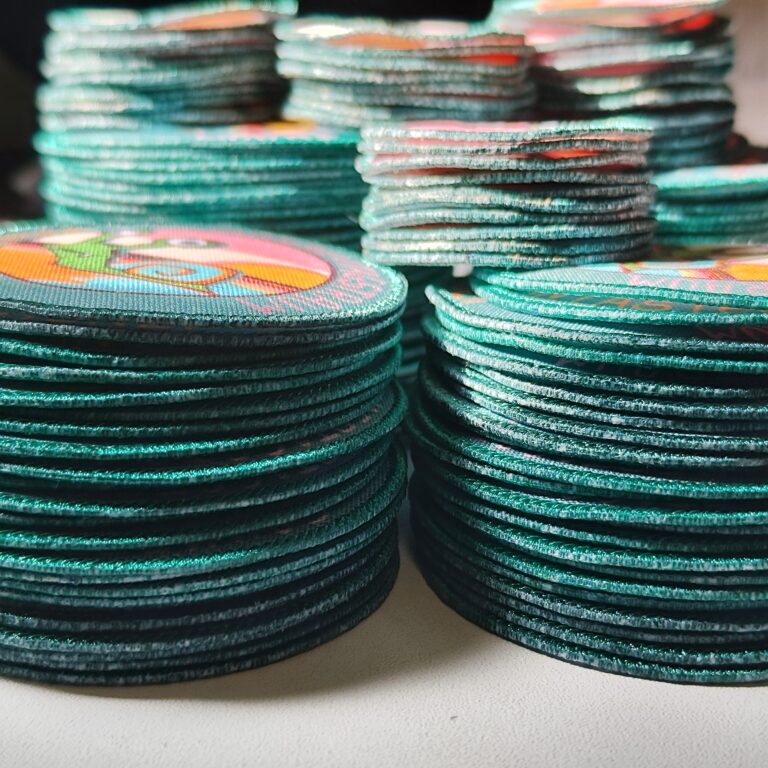
A better solution can be a printed patch with an embroidered border or a hybrid patch, where the detailed image is printed on fabric and the edge or selected elements are embroidered.
This allows the patch to preserve more of the original image while still having a real textile patch finish.
We do both classic embroidered patches and print-on-textile patches with embroidered border.
Final Thought
The best embroidered patches are not the ones that copy every pixel.
They are the ones that translate the idea clearly into thread.
A good patch is not just a picture. It is a small textile object, designed with the material, the machine and the final use in mind.
Usually not exactly. AI images often contain tiny details, gradients, shadows and textures that cannot be reproduced one-to-one with thread. The design usually needs adaptation.
Because it is a technical stitch program, not a visual illustration. It shows how the machine will build the patch from thread.
No, if it is done correctly. Simplification makes the design cleaner, more readable and more suitable for real embroidery.
Yes, but only within physical limits. Very small text may need to be enlarged, simplified or printed instead.
If the details are essential, a printed patch with an embroidered border may be a better option than full embroidery.