based on 5000+ sales. Wholesale discount applied automatically any 10+ pcs
Embroidered NFC Patches vs Just NFC Tags: Which to Choose
Search for NFC tags and you will find them for a few cents each: plain white stickers, keyfobs, PVC cards. So the reasonable question a business asks is – why order an embroidered NFC patch when a sticker does the same electronic job for a fraction of the price? The honest answer is that the chip is the cheap part, and the chip is not what makes the difference. What you are actually buying with a patch is everything around the chip: how it looks, how long it survives, whether people notice it, and whether it still works and still matches on your next order. Here is the comparison in full, because for some uses the cheap sticker genuinely is the right call.
A plain NFC tag and an embroidered NFC patch do the same thing electronically
Let us be clear about what is not different. The same chip inside stickers or patches, and both open the same link on the same phones. If your only requirement is “a phone taps something and a page opens,” in a controlled setting where appearance and durability do not matter – a tag stuck inside a folder, on the back of a printed card, under a desk – a plain tag is the correct, cheaper choice. Nobody should pay for a patch to solve that.
The patch earns its price only when the object is seen, worn, handled, or reordered. That covers most business and marketing uses, which is why the question comes up – but it is worth naming the cases where it does not.
Why businesses choose the patch: it is branding people can see
A blank white sticker on a jacket says nothing and invites no one to tap it. An embroidered patch carries your logo, so it works even when no phone is near – it is decoration and brand presence first, and a tappable link second. That dual role is the whole point for swag and merch: the patch is doing its job the entire time it is worn, and the tap is a bonus that fires when someone is curious. A sticker only exists to be tapped, and an untapped sticker is invisible.
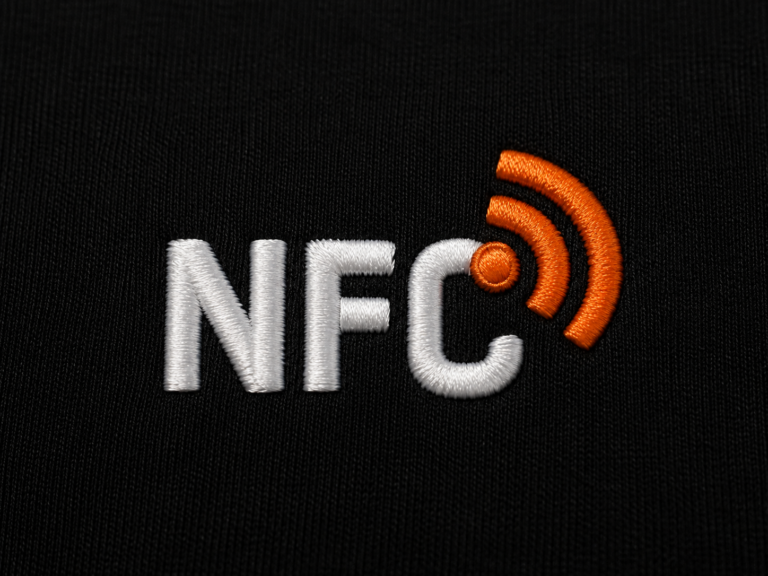
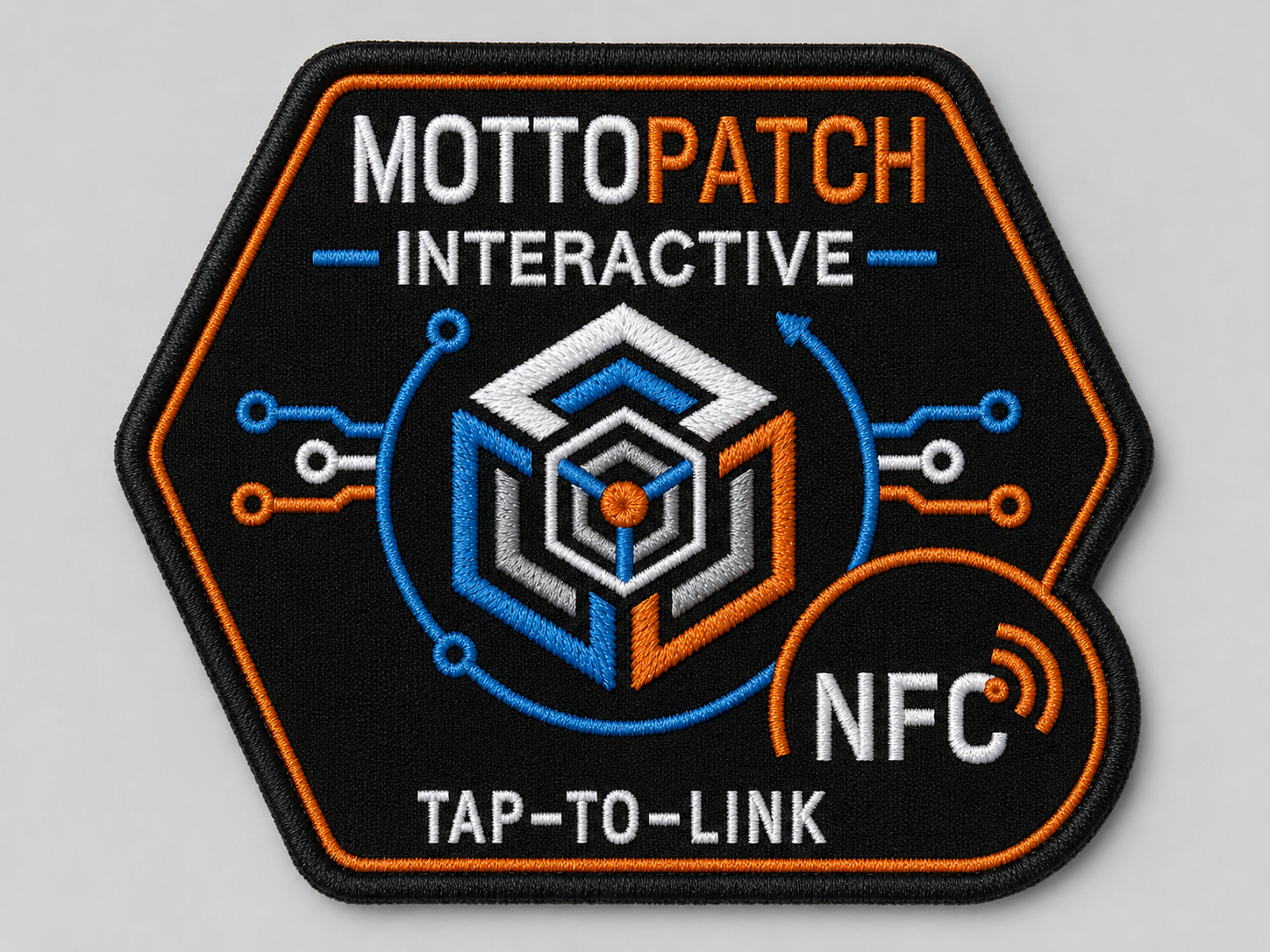
There is also a recognition problem. Most people have never knowingly tapped an NFC sticker and will not think to try. A patch that is visibly a designed object, with a small “NFC” mark stitched in, tells people it does something. Novelty gets the first tap; the mark makes it repeatable.
Durability: a sticker peels, a patch is built to be worn
Adhesive NFC stickers are not made for apparel. They lift at the edges, collect grime, and fail in the wash. On a garment or a bag – anything flexed, rubbed, or laundered – a stick-on tag has a short life. An embroidered patch is a textile object designed for exactly that environment, and the chip is protected inside its construction rather than glued to a surface. For workwear, uniforms, and merch people actually use, this is usually the deciding factor rather than looks.
The washing point deserves a note, because it is the first thing people worry about. Our current NFC patches use removable hook-and-loop backing and come off before the garment is washed, so the electronics never go through a cycle at all. That is a more reliable answer than any “washable sticker” claim – the tag simply is not present when the water is.
Innovative tech swag that does not look like a giveaway
Startups looking for unusual, memorable tech swag run into the same wall: most “innovative” merch is a gadget that ends up in a drawer. An NFC patch on good apparel is different because it is quiet. It looks like a well-made patch; the technology reveals itself only on the tap. That restraint reads as considered rather than gimmicky, which matters when the audience is other technical people who have seen every branded power bank and stress ball. A cheap sticker on a t-shirt signals the opposite – it looks like exactly what it is.
And because apparel gets kept and worn, the patch keeps working long after the event. A tag on a handout is discarded with the handout. That difference in lifespan is the real return on the higher unit price.
Consistency and reorders: the part cheap tags cannot offer
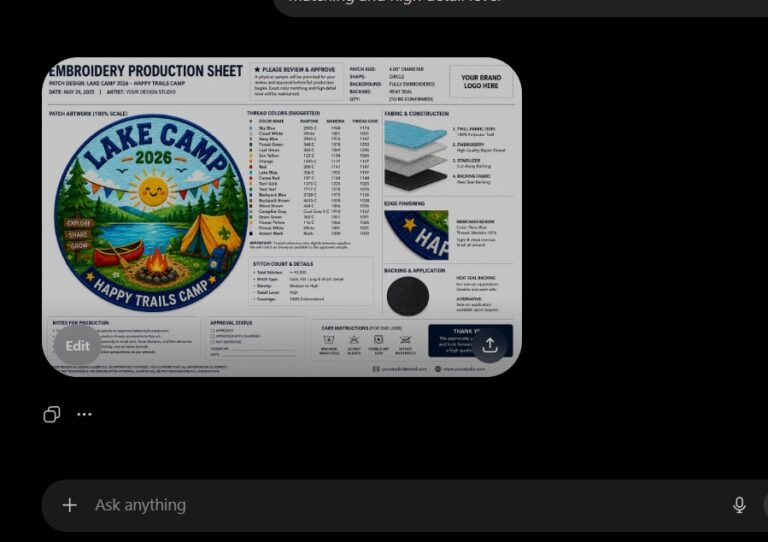
Order a hundred generic stickers today and another hundred next year and you get whatever the seller happens to stock – no guarantee the chip type, the size, or the behaviour matches. For a team that grows in steps, that is a problem: batch two should behave and look identical to batch one. A patch supplier who stores your full specification – size, colours, stitch layout, chip type, and what was programmed – can make the second order match the first months later. That continuity is worth more to an ongoing operation than the sticker price ever was.
Control over what is on the chip, and where it was put there
Cheap tags bought online often arrive pre-programmed with a seller’s own URL or a marketplace redirect, and you are trusting an unknown supply chain with what your customers tap into. When the tag is programmed to order in the EU workshop you work with, you know exactly what is on it, it is verified and read-tested before it ships, and the content is not routed through anyone else’s system. For public sector buyers, regulated industries, and anyone who cares about where a link points, that chain of custody is often the point – not a nicety.
When the cheap tag really is the right choice
To keep this honest: if you need a large number of tags for a purely functional, hidden, indoor use – inventory markers, tags inside packaging, a link on the back of a printed card – buy plain stickers. The patch adds no value there and costs more. The patch is the right answer when the object is seen and worn, when it needs to survive real use, when it should carry your brand whether or not anyone taps it, and when you will reorder and need the next batch to match. That is most merch, swag, and workwear – but not all of it, and a supplier worth working with will tell you which side your use falls on.
If your use is the patch side of that line, the NFC patches service page has the chip options, sizing and pricing. For removable-backing construction specifically, see hook and loop patches.
The chip is the cheap part and works the same in both. A patch adds what a sticker cannot: visible branding whether or not anyone taps it, durability on worn and washed items, recognisability so people know to tap, and consistent reorders that match the original. A plain sticker is the right choice only for hidden, functional, indoor uses.
Yes. An NFC patch on good apparel is memorable without looking like a gimmick – the technology shows only on the tap, which reads as considered to a technical audience. Because apparel is kept and worn, the patch keeps working long after the event, unlike a handout tag that is discarded.
Our NFC patches use removable hook-and-loop backing and are taken off before the garment is washed, so the electronics never go through a wash cycle. This is more reliable than a washable-sticker claim, because the tag is not present when the item is laundered.
They can arrive pre-programmed with a seller’s URL or a marketplace redirect, so you are trusting an unknown supply chain with what customers tap into. Tags programmed to order in the EU workshop are verified and read-tested before shipping, and the content is not routed through anyone else’s system – which matters for regulated and public sector buyers.
For hidden, functional, indoor uses at volume – inventory markers, tags inside packaging, a link on the back of a printed card – a plain sticker is cheaper and adds everything the situation needs. A patch is worth it when the object is seen, worn, needs to survive real use, and will be reordered to match.