based on 5000+ sales. Wholesale discount applied automatically any 10+ pcs
Embroidered vs Woven vs Printed Patches: How to Choose the Right Type for Your Brand
Choosing the right type of custom patch can be surprisingly confusing as seen from our customers questions. Choosing between embroidered, woven, and printed patches is not just a technical decision.
Each method affects durability, visual impact, and long-term brand perception.
Understanding how these techniques differ helps businesses avoid costly mistakes — especially when patches are used on uniforms, workwear, or repeated branding materials.
Many businesses search for:
- embroidered patches vs woven patches
- printed vs embroidered patches
- which patch type is best for uniforms
- sublimation patches vs embroidery
After more than 10 years of creating branding elements for companies, clubs, schools, and service teams, one thing is clear:
There is no “universal best patch.”
There is only the right patch for the right purpose.
Below is a practical, experience-based comparison to help you decide.
1. Printed / Sublimation Patches
(Fast, economical, event-oriented solution)
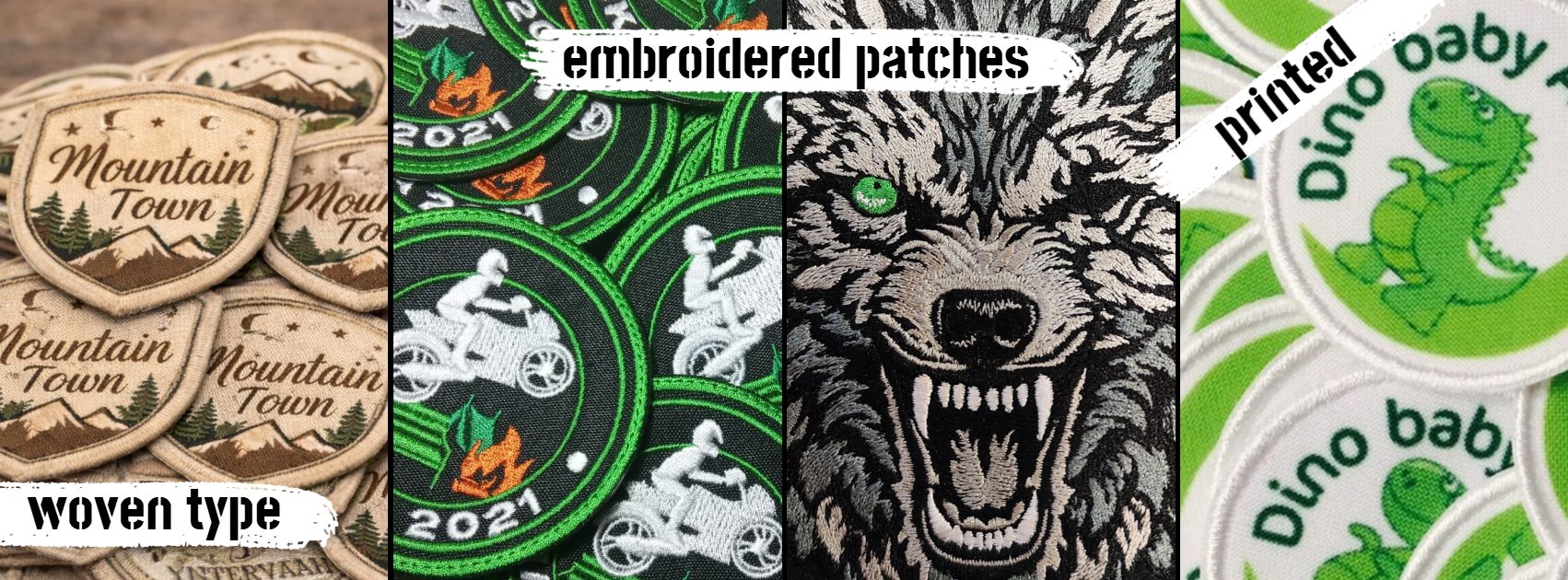
Printed patches — often made using sublimation — are created by printing the design onto fabric rather than stitching it.
When they work well
- Sponsor labels
- Short-term events
- Sporting tournaments
- Temporary branding
- Promotional campaigns
They are:
- quick to produce
- visually detailed (good for gradients or photos)
- cost-efficient for single-use scenarios
Limitations to consider
Printed patches do not have thread texture.
The surface is flat, and colors can appear less vibrant compared to stitched thread.
Over time, they may:
- fade
- lose clarity
- feel less substantial
For businesses investing in long-term brand perception, printed patches are often better suited for temporary use rather than core identity elements.
2. Woven Patches
(Fine detail, subtle and classic look)
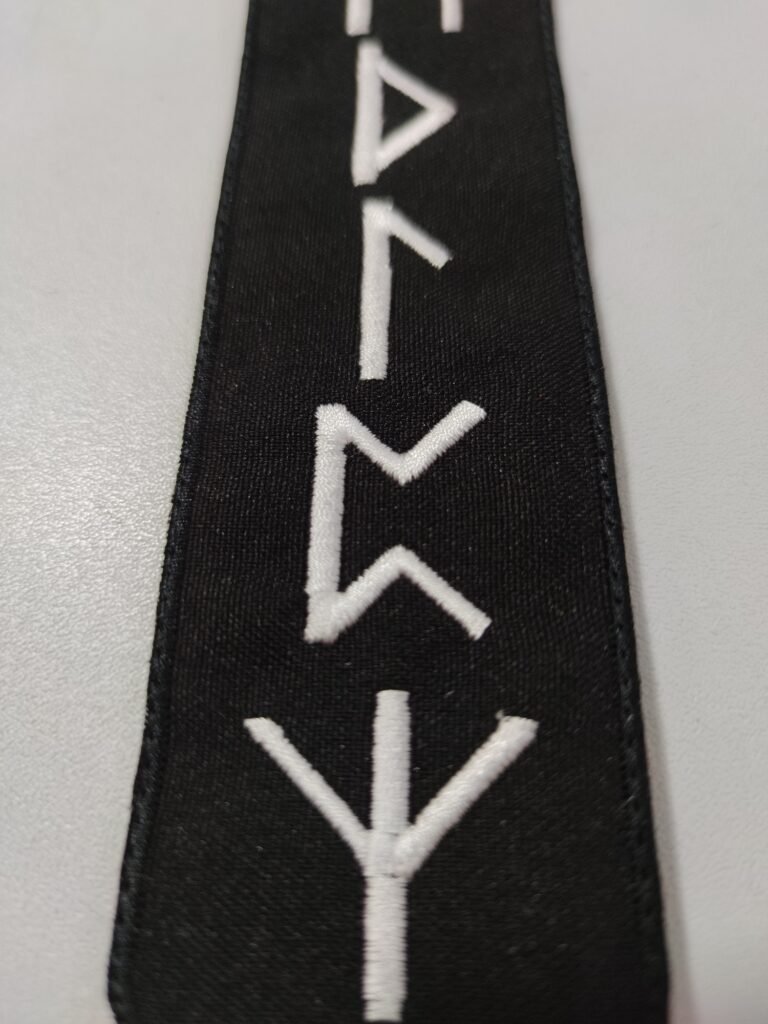
Woven patches are created by weaving thin threads together rather than building raised stitches.
When woven patches are ideal
- Small text less than 5-6 mm height
- Intricate fine-line logos
- Subtle designs
- Clothing-label aesthetics
They offer:
- smooth, flat finish
- retro understated appearance
- good readability for small typography
Woven patches are often used for:
- fashion labels
- minimalist eco branding
- interior garment tags
Things to keep in mind
- Color selection is more limited than embroidery
- They have a matte, less vibrant not so impressive look
- Minimum orders are often around 100 pieces
Woven patches are excellent when detail and refinement matter more than brightness or dimensional texture.
3. Mixed Techniques: When Innovation Meets Practical Limits
In recent years, mixed-technique patches have become popular. You might notice them in the shops.
These combine elements such as:
- embroidery
- printed details
- plastic film overlays
- PVC accents
- metallic finishes
At first glance, they can look impressive — especially in retail environments. The contrast between textured thread and glossy surfaces creates visual impact.
However, combining techniques can sometimes compromise usability.
For example, a sports uniform patch that mixes embroidery with a plastic film layer may look striking in a shop. But plastic elements often do not age the same way thread does. After repeated washing, the film may crack, peel, or lose clarity — while the embroidery itself remains intact.
The result is disappointment:
what looked innovative initially may not perform well over time.
For long-term uniforms, workwear, and professional branding, durability should be considered as carefully as design creativity.
A patch should still look strong after dozens of washes — not only under store lighting.
4. Embroidered Patches – our favorites
(Vibrant, premium, textured and durable, no minimum)
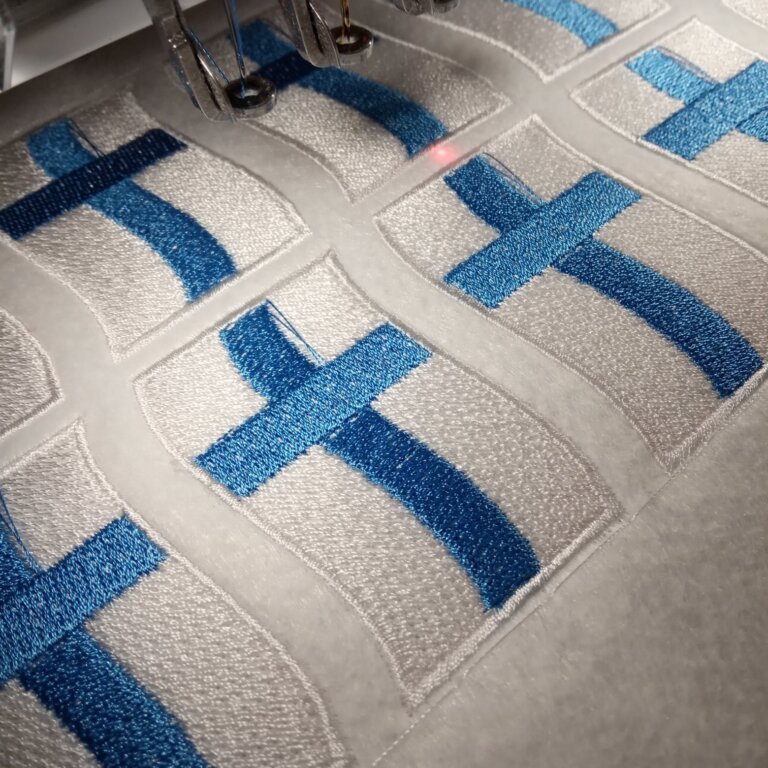
Embroidered patches are built with stitched thread, usually satin thread, which naturally reflects light.
This gives them:
- depth
- texture
- vibrant color presence
- strong visual impact
When embroidery is the best choice
- Company logos on uniforms
- Service teams and staff apparel
- Schools and associations
- Clubs and organizations
- Long-term branding
Embroidered patches create a tactile experience. Such branding is remembered and recognized.
They feel structured and professional.
Bright thread colors maintain visibility even at a distance — which is important for uniforms and team identification.
Why Embroidery Often Wins for Business Branding and Why We Do Recommend It
From practical experience (we tried different techniques through years):
- Embroidered patches are suitable for both small and large quantities
- They maintain consistency across repeat orders
- They offer stronger perceived value
- They receive more positive feedback from end users (so true)
There is something about well-made embroidery that elevates a garment.
Many business owners first realize this when they see a clean, precise embroidered logo on a uniform — the difference in perception is immediate.
Design Considerations: Adapting to the Technique
Each patch type requires design adaptation.
Printed patches
- Good for gradients and photo-like artwork
- No stitch limitations
Woven patches
- Suitable for thin lines and small text
- Limited visual effect
Embroidered patches
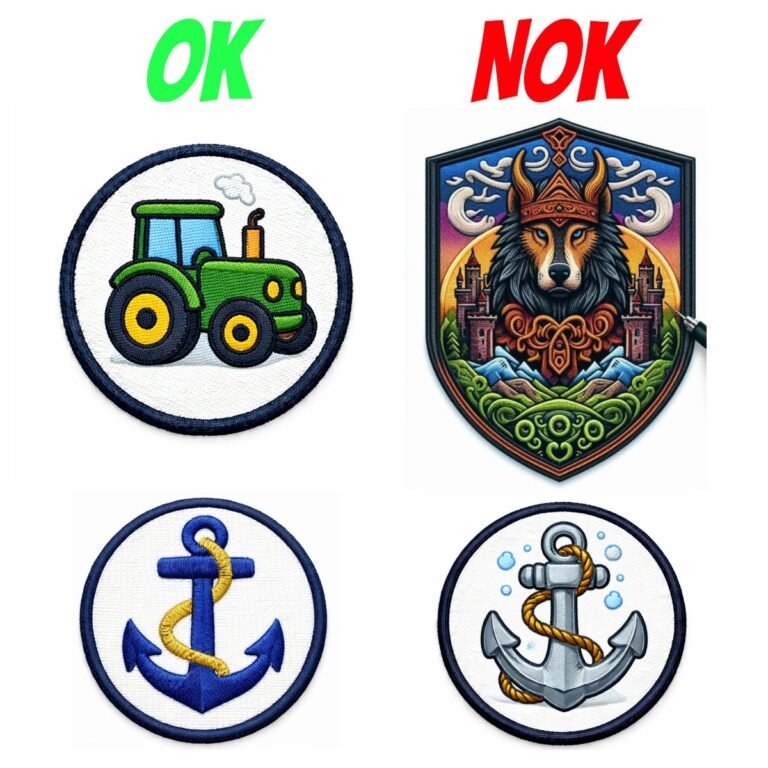
- Best with clean shapes
- Avoid ultra-small text
- Works beautifully with bold forms and defined outlines
A design optimized for embroidery will always look better than forcing a digital design directly into stitches.
Common Questions Businesses Ask
Which patch type looks most premium?
In most uniform and branding applications, embroidered patches are perceived as more premium due to texture and thread shine.
Which patch type lasts longest?
Embroidered patches generally offer higher durability for repeated washing and daily wear.
Which patch is best for small text?
Woven patches handle very small typography better than embroidery.
Which is best for events?
Printed patches can be effective for short-term event sponsorship.
A Strategic Perspective
Choosing a patch is not just about production method.
It affects:
- how your team is perceived
- how your brand is remembered
- how consistent your identity remains over time
Temporary visibility and long-term brand presence are not the same objective.
Final Thoughts
Every patch type has its place.
Printed patches are efficient for short-term use.
Woven patches are elegant for subtle detail.
Embroidered patches combine durability, vibrancy, and presence — especially for organizations investing in long-term identity.
If your goal is:
- visible branding
- strong uniform impact
- repeatable, consistent production
embroidered patches are often the most balanced solution.
Embroidered patches use raised thread stitching, creating texture and vibrant colors.
Woven patches use thin woven threads for fine detail and a flatter surface.
Printed patches are suitable for short-term use but may fade or lose clarity faster than embroidered patches.
Embroidered patches are commonly preferred for uniforms due to durability, visibility, and premium appearance.
Yes, many manufacturers support small runs as well as bulk production.
Published on: March 3, 2026
Last updated on: March 4, 2026