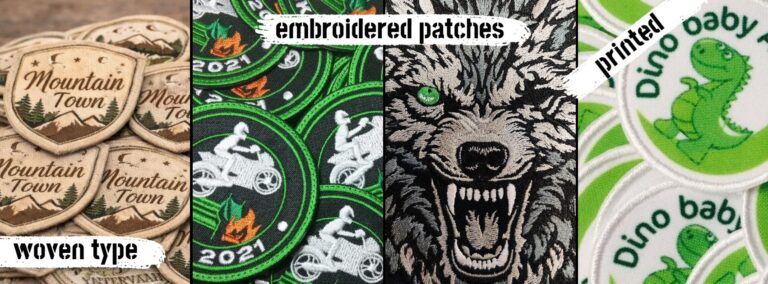
based on 5000+ sales. Wholesale discount applied automatically any 10+ pcs
Real Patch Manufacturer vs Reseller in Europe: How to Spot the Difference Before Ordering
I’ll start with Why. I didn’t plan to write this. But over time, something started to worry me. I get several emails daily offering me to outsource patches production overseas. Started as an occasional email from a factory in Asia offering patch production. Then a few more. Now they come daily.
All offering the same thing: “We can digitize your designs and produce your patches.”
The only detail they don’t realize?
We already make custom patches. For many years. Ourselves. Including digitizing.
And that’s when it became clear – if they can’t distinguish a producer from a reseller,
how is a customer supposed to?
They send me photos – I don’t like them, I see errors at once. I am an engineer, and do embroidered patches for 10+ years. The machines already do a lot, if a human knows how to program them and align with proper tech process. This blog post is for our clients, current and future. A propos, thank you for your support and amazing reviews, we work for you.
The market seem to be split between: Patch Makers vs Patch Resellers.
And most customers don’t know the difference. The supplier they trusted maybe wasn’t actually producing anything. Ever.
The design had quietly travelled – from reseller to subcontractor, sometimes further to freelance digitizer – until it became just another file in someone else’s system.
This post is not about blaming anyone. Many businesses work this way. Just we don’t.
But if you are building something – a brand, a business, a team identity, a product – and decided to order patches for your business or team you deserve to understand where and how actually is your order made.
Because that decision shapes more than just the patch.
It shapes the result, the experience, and sometimes… the future of your idea.
What You Will Learn
This guide explains how to distinguish a real embroidered patch maker from a reseller or outsourcing-based supplier, and why it matters for:
- product quality
- delivery time
- consistency between samples and final orders
- protection of your design and brand identity
If you are ordering patches for a business, team, or brand, this difference directly affects your result.
Who This Is For
- businesses ordering branded patches
- startups developing merchandise
- teams, clubs, and organizations
- designers working with custom textile products
Key Insight
Many patch sellers do not produce anything themselves.
They outsource production — often across multiple layers — which creates risks that are not visible at the ordering stage.
Why This Matters More Than Most Customers Realize
A client looking for custom patches almost always compares offers based on parameters that might seem obvious: price per piece, size, production time, setup fee. At first glance, everything seems simple. Several companies promise a similar result, but some offer a significantly lower price.
This is where mistakes often occur.
An ultra-low price in custom embroidery often reflects not production efficiency, but a different operating model: when a company appears to be a European manufacturer, but in reality
acts as a showcase or intermediary, with communication, design, digitalization, and production itself outsourced outside the EU.
For the client, this means more than just the risk of a poor result. It also means the risk of wasted
time, complex approvals, variable deadlines, inconsistent quality, design leakage, and a general feeling of disappointment with the result. While in another scenario, when you work directly with embroidery experts – the reaction is usually the opposite (just read reviews about us online).
Typical process with resellers: A design is created → passed to supplier → outsourced to subcontractor one or several → sometimes even re-digitized by outsourced freelancers → result may appear elsewhere
Typical process with real patch makers: A design is created → passed to maker → digitized and produced in-house → result securely kept for future simple reorders
How the Patch Market Actually Often Works (Behind the Scenes)
Not all patch sellers you see online are producers. Many act as intermediaries.
The ones acting as Front-End Agencies may have sleek European websites, local VAT numbers, and customer support in your native language. However, they may own no embroidery machines. They take your design, send it to a partner factory (usually in Asia), and have the final product shipped to them for quality checks or drop-shipped directly to you.
The others acting as Hybrid-Shops may have small-scale embroidery setups in-house for “rush” orders or low-volume samples but outsource all large-run orders (over 50–100 pieces) to maintain competitive pricing.
The typical model looks like this:
The website and legal entity may be registered in Europe;
Marketing and order acceptance appear to be the work of a local manufacturer;
However, actual order processing, design preparation, embroidery program creation, and
the actual production are performed by third-party contractors outside the EU;
The client is either unaware of this or does not understand how this impacts deadlines, quality, and design ownership control.
The longer the chain between the client and those who actually design and produce the patch, the
higher the risk of loss of control, accuracy, and responsibility.
The true local manufactures seem to be the minority in the industry as (surprise!) – you need to own and maintain the complicated machines, get the proper threads and fabrics, hire very experienced digitizer and very skilled machine operator as a minimum in addition to a sales manager.
Warning Signals You Are Dealing with a Reseller (Not a Patch Maker)
What does a client typically feel when working with a patch reseller? Below are some warning signals during the ordering process.
When the seller doesn’t directly control the design digitizing, programming, and production, the client almost always begins to sense this already during the initial communication.
- Very fast, generic replies with no technical depth or with some details but very slow
- It’s difficult to get a direct answer regarding deadlines or quality
- The company disappears for days between approval rounds
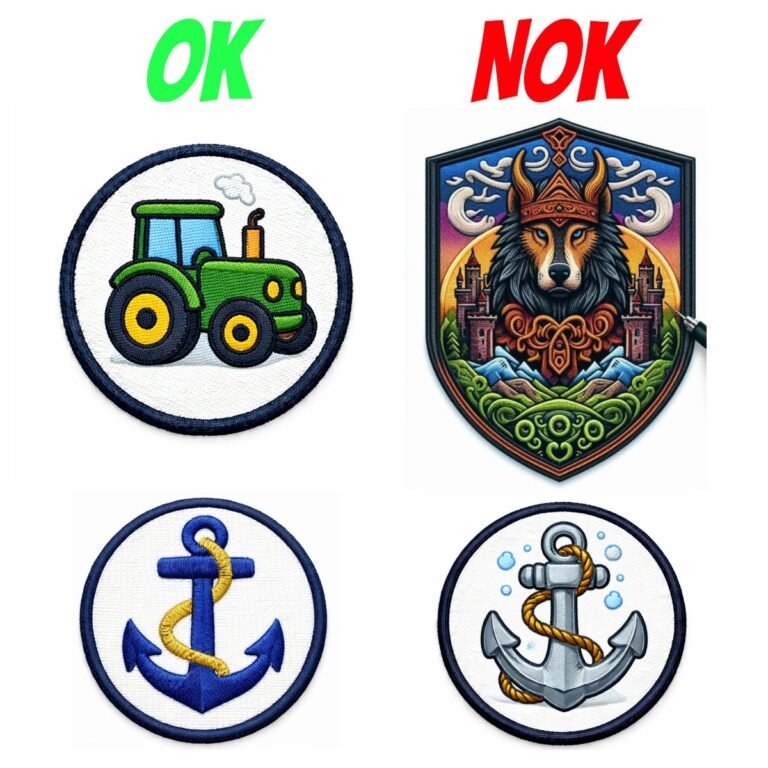
- Layouts are edited without understanding the logic of the embroidery (just another auto-digitized run without human touch of specific elements)
- Long (10-14 days) and inconsistent lead times, in fact embroidery is quite fast if you have a machine a proper skills in-house
- Production deadlines are constantly pushed back
- No clear production location
- No real sample control
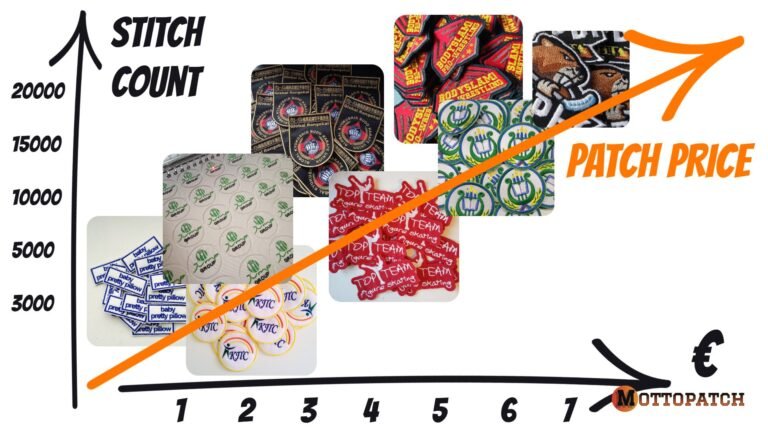
- No setup fee. That might seem nice, but in reality, it is not. It usually means the design is auto-digitized by software, while high-quality embroidery almost always requires a 1-6 hours manual human digitizing effort and making couple of samples to adjust the program that is named digitizing or setup fee
- If they offer “PVC patches,” “Woven labels,” and “Leather patches” and the Embroidered patches all on one site, they are almost certainly an agency. It is very rare for a single European shop to have the machinery for all four distinct processes.
- Communication feels disconnected from production reality
- Price is surprisingly low compared to EU production. If the price for 100 patches is under €1.50–€2.00 per unit, it is mathematically undoable that it was made in Western or Northern Europe
- Higher MOQ. Outsourcing agencies usually have high minimums (like 50+ pieces) to cover the cost of international shipping and middleman fees
- Final product differs from what was promised, just read reviews online, I personally was surprised
Quick Test: How to Notice the Risk of Hidden Outsourcing Before Ordering
- Who is answering your questions?
If simple questions about technology, deadlines, design limitations, and production logic are answered with generalities, this is a red flag. A real manufacturer or engineer usually provides specific answers at once. - Can the company explain how your design will be adapted for embroidery?
If they simply promise to “make it like the picture” without discussing any limitations, this is a risk. Embroidery is very different from printing, there is a needle and a thread, not painted dots. You cannot press the Print button, you need to tell a machine how to stitch step by step. - Does the website show clear signs of an in-house production approach?
For example:
Real photos of products,
Real software examples,
Explanation of the technology,
Clear limitations on size, detail, color, and text.
If the website is built solely on high-sounding promises and low prices and bright ai mockups, this is a reason to be worried. - Does the company have consistent independent reviews outside of its own website?
It’s best to look beyond the reviews on the website and look at external platforms. Anyone can post nice reviews on own website. But you can hardly erase bad reviews from outside platforms and marketplaces. It’s especially helpful to read not only the rating but also the content of the complaints. - How transparent are the deadlines and stages?
If they can’t clearly explain:
what happens after payment,
who does the digital proof,
how many approval rounds,
when the file/sample/production/shipment will be available,
this is a sign of weak process control. - Does the company have an abnormally low price while promising “full service”?
A low price alone doesn’t prove a problem. Makers can run promo or for example wo do not charge a lot for simple texts. But if it’s combined with vague communication and a lack of technical specifics, the risk increases significantly. - Is there a sense of responsibility in place?
A good sign is when it’s clear the company truly understands your order, responds quickly
regarding the technology, and doesn’t lose track of the discussion.
If a company has 4-5 of these signs at once, be careful:
Ultra-low prices without a clear explanation;
General answers instead of technical specifics;
Weak or alarming reviews on independent sites;
Disappearances between approval rounds;
Promise to “make any design as is”;
No clear explanation of who adapts the design for embroidery and how;
Unclear control over deadlines and stages;
Little online evidence of in-house expertise.
The Hidden Risks of Outsourced Patch Production
The problem isn’t that some of the work is done elsewhere.
The problem is that clients are often sold the image of a genuine local European
manufacturer, while in reality they are buying a long chain of intermediaries, outsourced communications, and remote fulfillment.
It is this gap between the store and the actual fulfillment that most often leads to:
- Communication issues
- No samples, or significant difference between Promised and Delivered quality
- Weak engineering: poorly auto digitized designs go directly to production
- Design reuse or leakage risks
- Inconsistent quality between orders
- Delays due to multi-layer communication
- Lack of accountability
- Inability to reproduce exact design later
Why is this especially risky for custom embroidery?
Custom embroidery is not a standard product. Here, quality depends on many decisions:
How the original design is adapted for embroidery;
How the program for the machine is made;
What simplifications are made, including color scheme;
How the size, fabric, stitching type, and material behavior are taken into account;
How the visual result is agreed upon;
How the sample is made and approved.
If there are too many layers between the client and the embroiderer, important nuances can be gone.
And that’s why, in custom embroidery, a long production chain is much more dangerous than it seems at first glance.
What About “Cheap” Pricing
If you go to a site like a “global” patch agency, it seems so cool at first sight. But:
- The Catch: The patch itself is incredibly cheap (sometimes under €1.00), but for only 30 pieces, the shipping and customs often cost as much as the patches themselves
- Import Risks: You are responsible for taxes and tariffs upon import to Europe, which erases the “savings” significantly
If a company promises:
custom design,
free setup digitizing,
sample approval,
small and medium runs,
fast communication,
high quality,
production “like a real European manufacturer,”
but offers a price that seems so low, a logical question arises:
How does this work?
Typically, there are few options:
simplified or auto digitizing;
lack of real engineering work;
cheap outsourced sub-contractors;
weak quality control;
minimal involvement in approval;
remote production, where the seller does not directly manage the process.
The low price here is often achieved not through efficiency, but through no responsibility for the work done.
If you need to check patch price estimates in Europe, we are quite transparent on this, check the Pricing page.
Why Some Businesses Use This Model
- lower upfront costs
- no need for equipment
- easy to start selling
- scalability without production
BUT: Customer carries the risk.
What a Real Patch Maker Looks Like
What distinguishes a real patch manufacturer?
Some signs:
Clear and professional communication with capability of answering literally any “strange” question;
Honest discussion of design limitations;
Explanation of how exactly the layout will be adapted;
Transparent deadlines and stages;
Real engineering logic, not just promises;
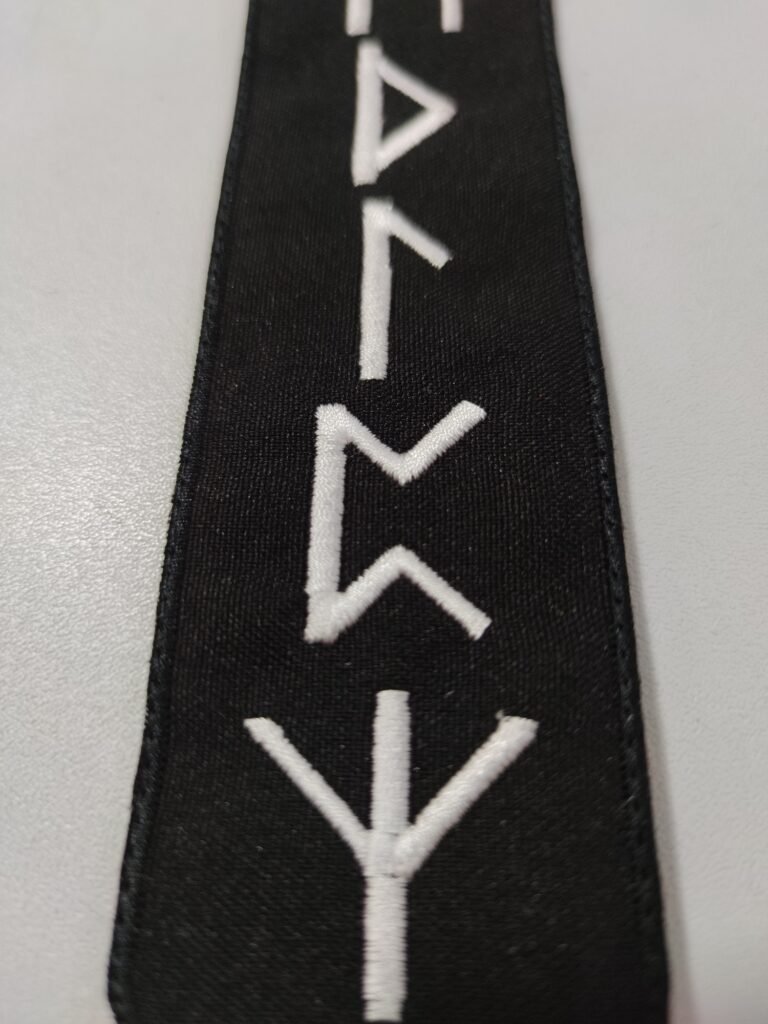
Own work examples that demonstrate the quality of embroidered patches;
A manageable chain of responsibility from approval to delivery;
A clear and open quotation and paperwork process.
Some more positive signals of a true patch maker:
- in-house production, small batches can be dispatched within 1-2 days
- direct expert level communication. When you contact them, you are usually dealing with the person who actually understands the limitations of the embroidery machine, rather than a sales agent reading from a script
- direct control over quality
- same process for sample and full order
- no minimum. Because they own their machines, they can offer 1-piece orders
- technical understanding (digitizing, materials), the embroidery “programming” is usually done in-house
- consistent repeatability when reordering
- the “Rush” option: a company that actually owns its machines will often offer a 1-2 day turnaround for a premium. An outsourcing agency cannot do this because the shipping from Asia alone takes more days
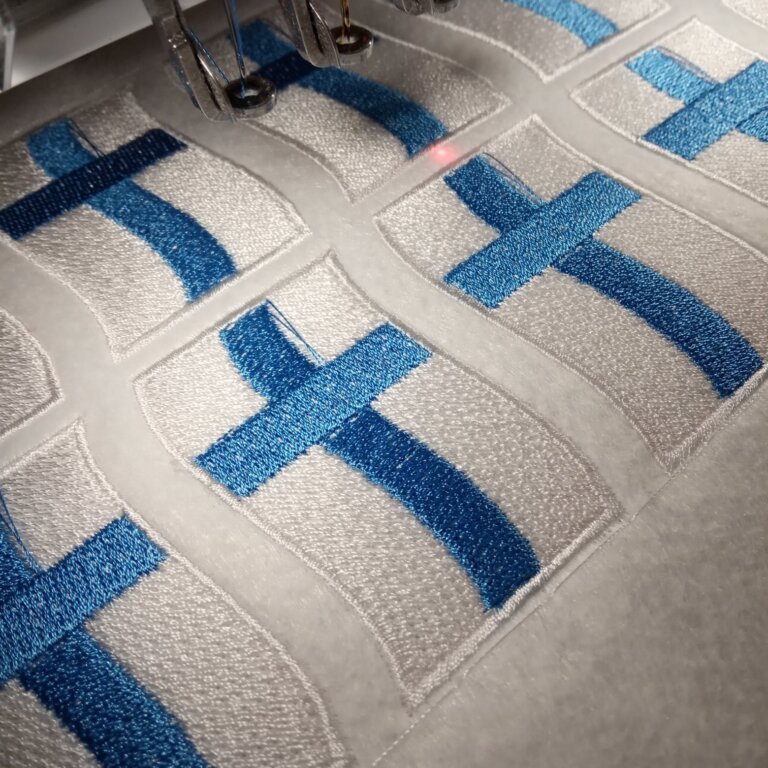
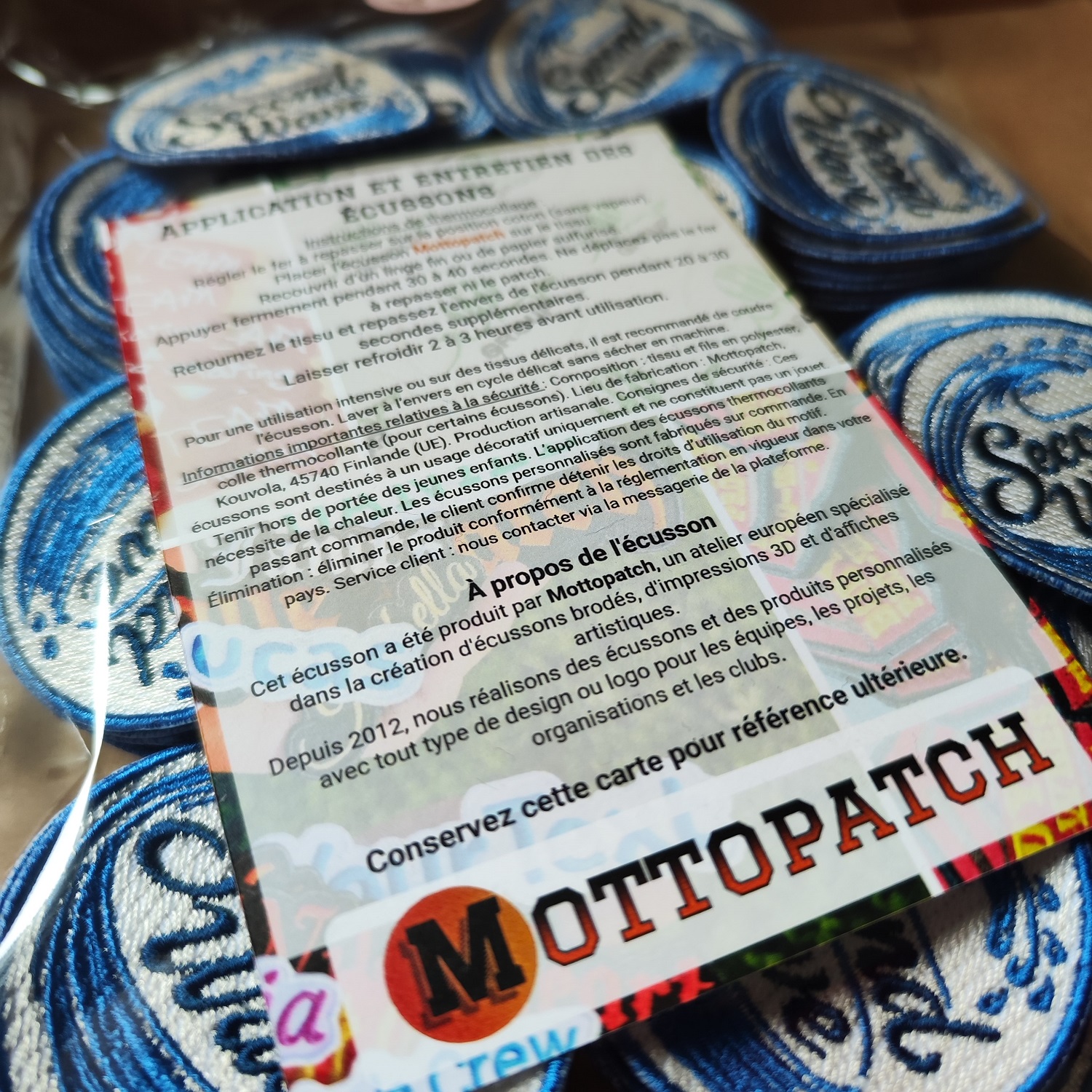
- Loved Machines photos and process videos. Local patch makers are proud of their hardware and often show photos of their actual workshop. BTW, did you check Mottopatch IG? We share some interesting patches in process there
A good manufacturer doesn’t just sell a patch. They sell predictable and manageable results.
A Different Approach: Controlled Patch Production
Some producers choose a different path – keeping design, digitizing, and production under one roof. Not to boast, but Mottopatch is this type of patch maker.
- design is not passed across unknown parties
- samples match production
- repeat orders are consistent
- communication reflects real production constraints
How to Choose the Right Patch Supplier (Checklist)
- ask where production happens
- ask who digitizes the design
- request sample consistency proof
- check lead time realism
- compare communication quality
- ask non-standard question, a real engineering type master can answer it while drinking coffee.)
A super-low price in custom embroidery often seems like a great deal. But very often, it conceals not efficiency, but a long chain of intermediaries, outsourced responsibility, and remote execution, where the client is sold a beautiful mockup rather than real control over the final outcome.
That’s why the risks of this model are almost always borne not by the reseller, but by the customer – with his time, stress, extended deadlines, poor communication, sometimes design leakage, and disappointment in the finished product.
Before ordering, it’s important to evaluate not only the price per piece, but also the company’s operating model. Because in custom embroidery, the real value isn’t a beautiful website or grandiose promises, but a clear chain of responsibility, honest engineering mastership, and the ability to bring an idea to a high-quality physical result of professionally embroidered patches.
Not all mistakes show immediately.
Some only come with quality disappointment or when your design is no longer yours.
A manufacturer produces patches in-house, while a reseller outsources production to third parties.
It can lead to inconsistent quality, longer lead times, and potential reuse of your design.
Ask about production location, request real samples, and check if they control digitizing and manufacturing directly.
Not always, but significantly lower pricing often indicates outsourced production.
It allows them to operate without equipment, reduce costs, and scale quickly — but reduces control over quality.
Because some of these companies operate not as real manufacturers, but as a showcase with outsourcing of design, digitization, and production
Specifically: how they discuss details, limitations, design adaptations, deadlines, and production stages.
Because the quality of the result depends not only on the image but also on the engineering logic of the stitching program for the machine, stitch sequence, color palette, thread compensation, and materials.
Yes. It is often noticeable already at the communication stage, based on how accurate the answers you receive and how transparent the process is.