based on 5000+ sales. Wholesale discount applied automatically any 10+ pcs
Event Swag in Europe: What Actually Gets Kept
Intro
Most trade show swag doesn’t survive the flight home. Pens, stress balls, and printed tote bags get grabbed by people who never had any interest in the company handing them out, then dumped in a hotel room bin before the return gate. For a founder or ops manager planning a booth budget, that’s not a minor annoyance — it’s spend with almost no return.
The fix isn’t a bigger giveaway budget. It’s a different logic: swag that people actually want to keep, that doesn’t attract pure freebie-hunters, and that stays within a sane per-unit cost. That’s a narrower brief than “merch,” and it points toward a different category of product than most swag vendors default to.
Swag vs. Merch: Why the Distinction Matters
“Merch” usually means apparel and accessories a company sells or gifts to build brand identity — hoodies, full uniforms, seasonal collections. “Swag” is what gets handed out at volume on a show floor: something small enough to produce in quantity, cheap enough to give away freely (or semi-freely), and valuable enough that a stranger chooses to keep it rather than discard it at the first bin.
Those are different design problems. A merch collection can afford to be expensive per unit because it goes to a known, smaller group — a team, a client list. Swag has to work at scale, for strangers, on a budget that doesn’t scare a finance lead.
Why Most Booth Giveaways Fail
The pattern shows up consistently in trade show and event marketing discussions: teams either overspend on premium tech gadgets that vanish invisible into a drawer, or underspend on generic plastic that broadcasts “we didn’t think about this.” Neither produces the outcome anyone actually wants, which is a small physical object that keeps a brand visible after the event ends and doesn’t attract people who have zero interest in the product.
Two problems repeat most often:
- The item is too generic to feel personal. A branded pen or keyring doesn’t become “the visitor’s” pen — it stays “some company’s” pen, which makes it disposable.
- The item is too catchy for its own good. Anything that looks free and fun draws a queue of people collecting swag with no interest in the company, diluting the giveaway’s actual purpose: starting conversations with people who might buy something.
A growing number of teams solve the second problem by gating the better items — giving them out after a short demo, a scan, or a real conversation, rather than leaving them on the table for anyone walking past. That single change shifts a giveaway from “landfill in three days” to “actually worth producing.”
Where Embroidered Patches and Pins Fit
This is the part most swag catalogs miss, because most of them are reselling the same rotating list of premium third-party products — tumblers, power banks, branded jackets from big-name apparel brands — at a markup. None of that is manufactured by the vendor selling it, and none of it solves the “too generic” or “too catchy” problem directly.
Embroidered patches and pins solve both, for a specific reason: they attach to something the recipient already owns and already values — their own jacket, backpack, cap, or tote. That’s the mechanism behind the “it becomes theirs” effect that makes swag worth keeping. A patch on someone’s own denim jacket isn’t “some company’s giveaway” anymore. It’s a badge on their jacket.
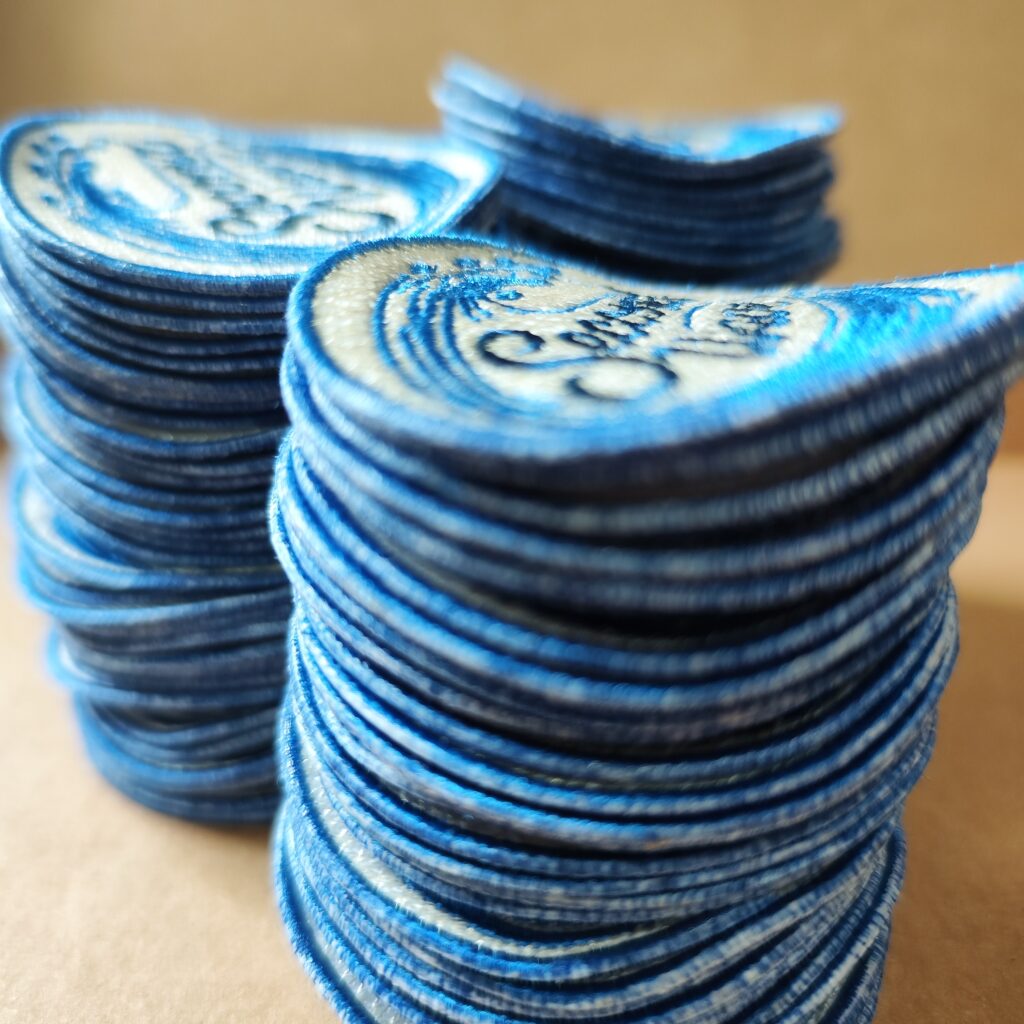
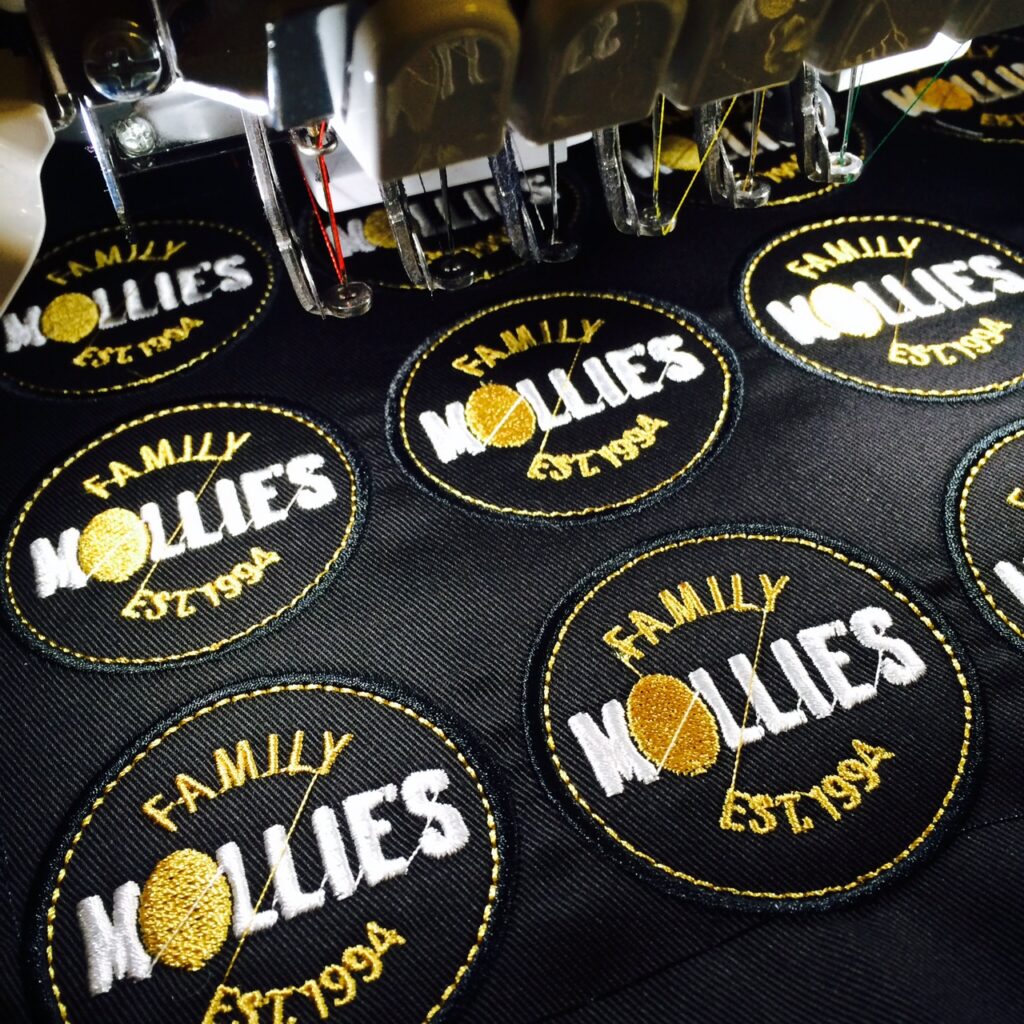
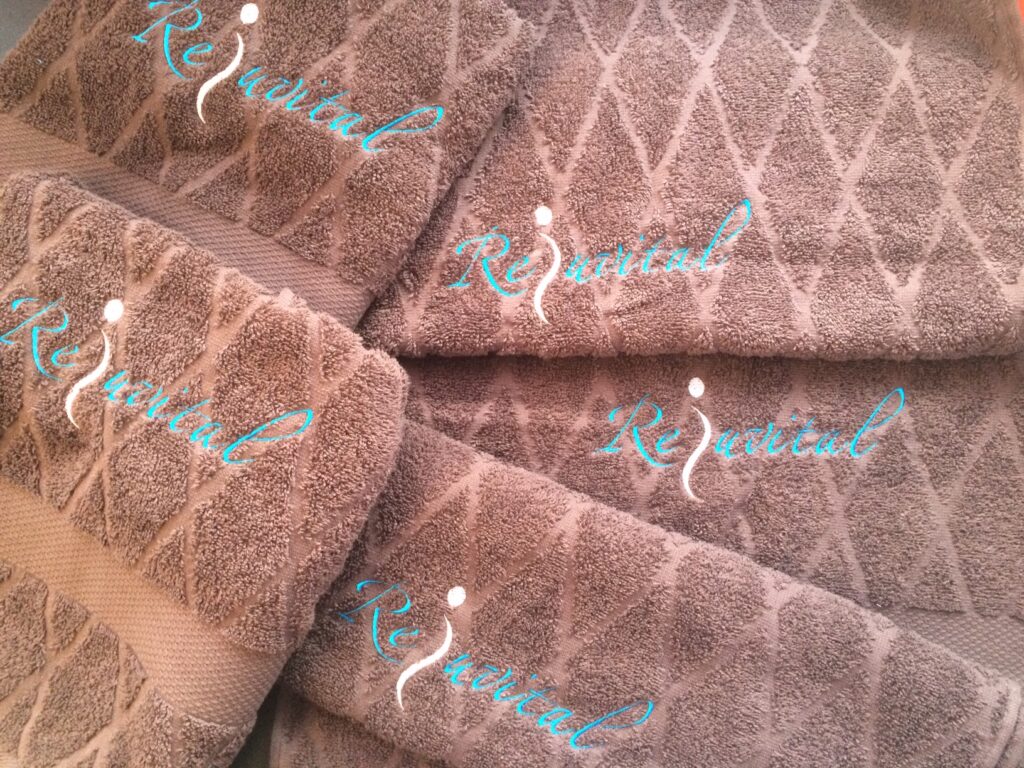
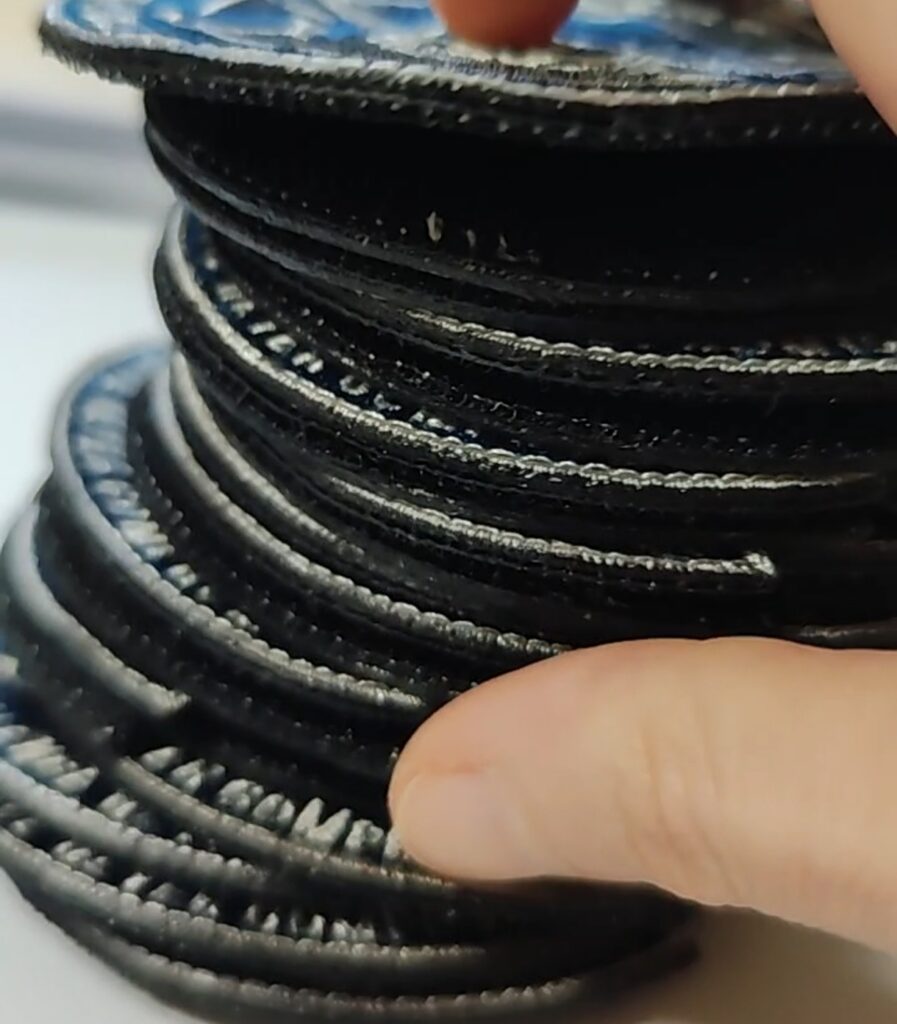
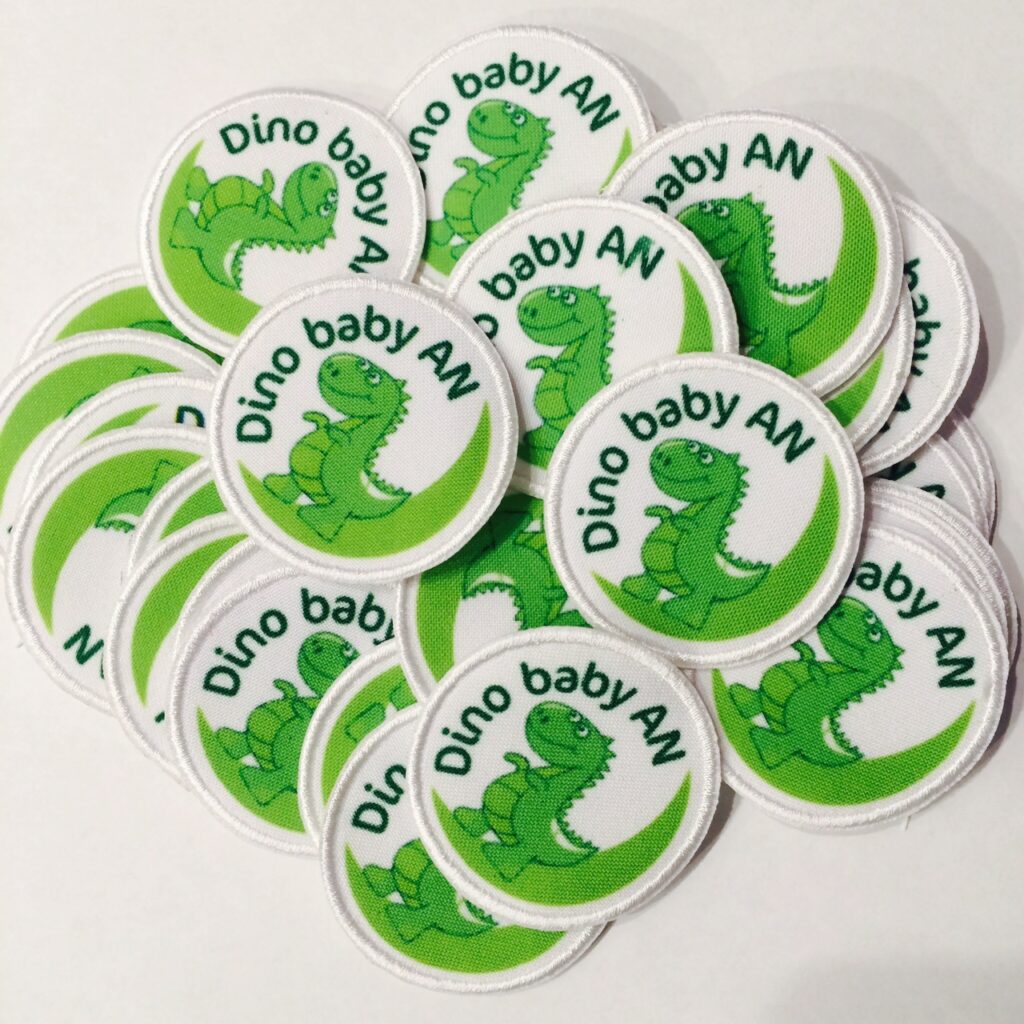
Three formats cover most event use cases:
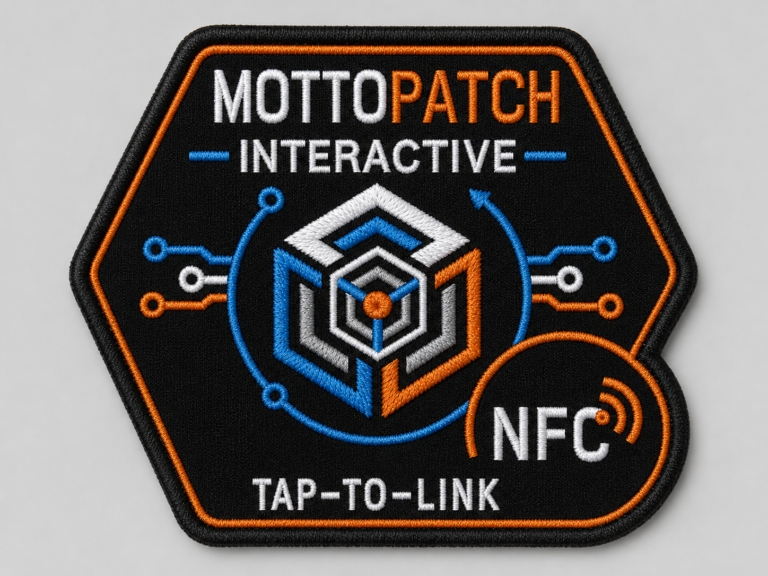
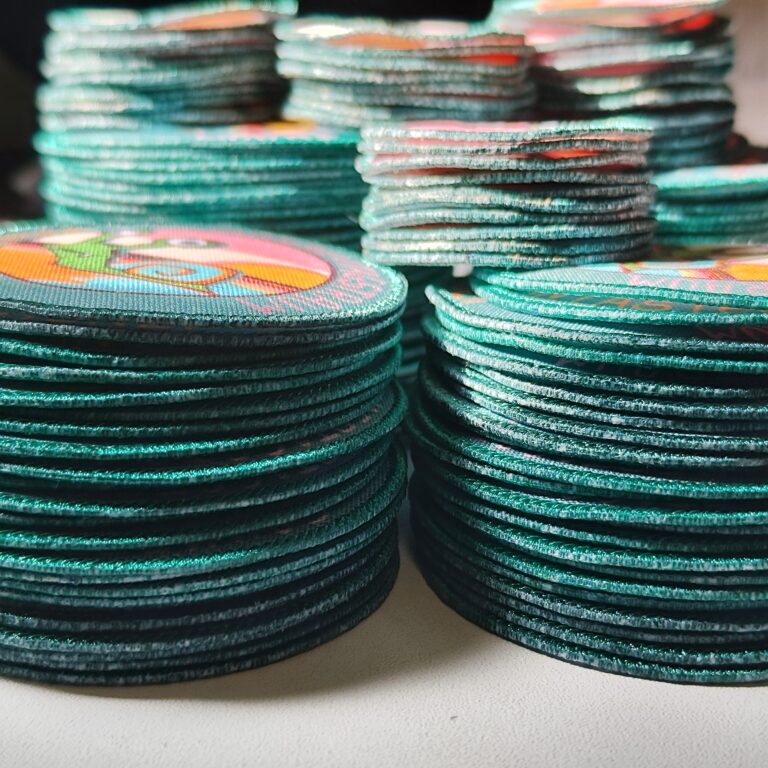
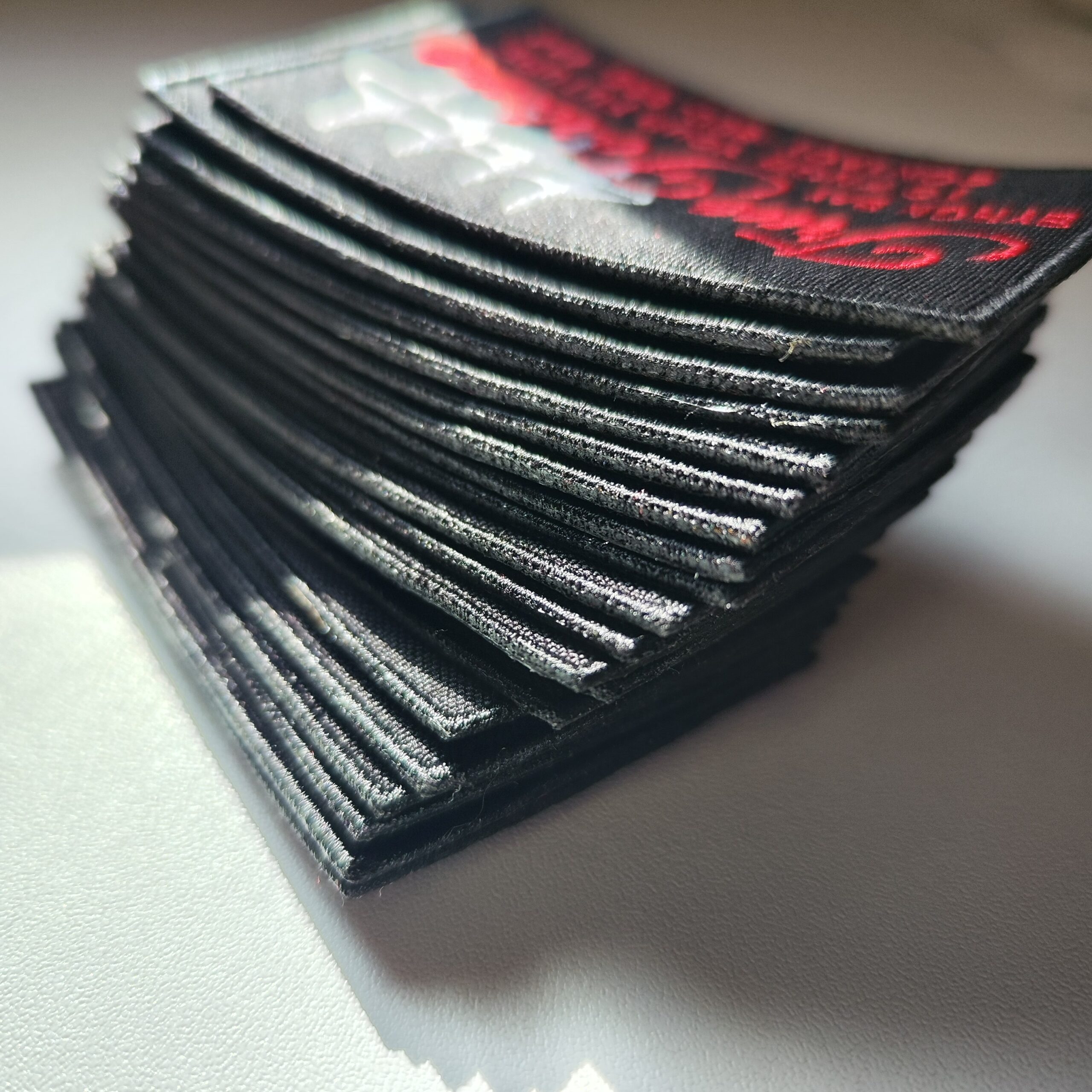
Embroidered iron-on or hook-and-loop patches. Low unit cost at volume, durable, and genuinely collectible if the design has any identity behind it — a mission patch style works especially well for tech and space-adjacent startups, sports and outdoor brands, and community-driven companies. Hook-and-loop backing also lets a company reuse the same jacket or vest or backpack across multiple events with swappable patches per show, per year, or per campaign.
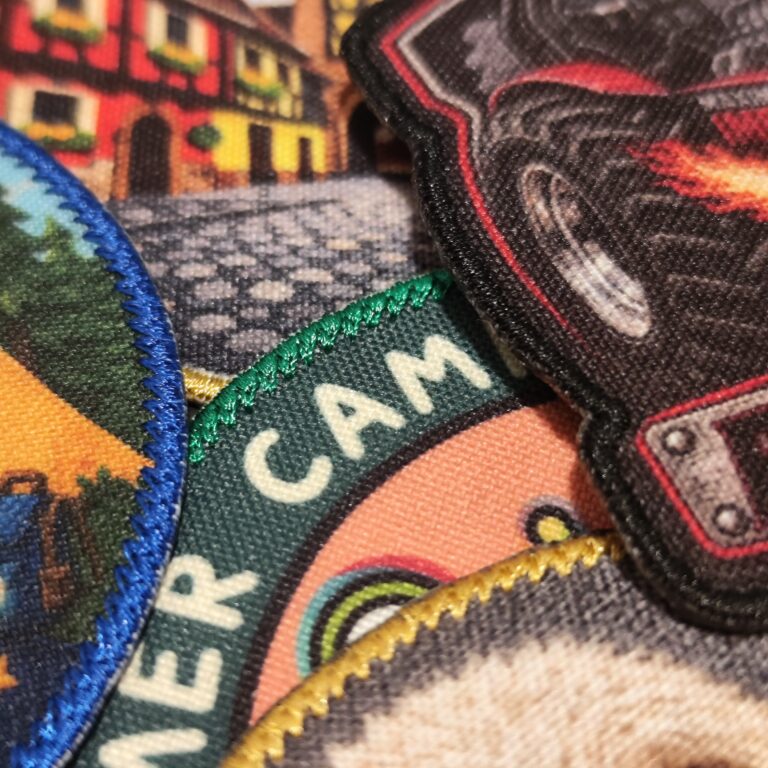
Print-on-textile patches with an embroidered border. For logos with gradients, photography, or fine detail that pure embroidery can’t reproduce cleanly, a printed center with a stitched border gets the visual fidelity of print with the tactile, “real patch” feel that a flat sticker or straight print-on-fabric patch doesn’t have.
Embroidered pins. A fabric-backed alternative to traditional metal pin-back badges, designed not to puncture or mark blazers, suit jackets, or dress shirts — a real, specific complaint with metal pins at business events where attendees are wearing their own tailored clothing. This makes embroidered pins a safer default for corporate, healthcare, hospitality, and any dress-code-sensitive audience.
Tiered Swag: Matching the Item to the Moment
The gating logic mentioned above works cleanly with patches and pins because they’re inherently small, inexpensive per unit, and easy to physically hand over as a “you earned this” moment rather than a pile on a table.
A workable tier structure for a booth or demo day:
- Walk-by tier — patch or pin, given freely. Low cost, brand-visible, no qualification needed. Functions as a conversation starter, not a lead-qualifier.
- Engaged-visitor tier — patch or pin, given after a short interaction. A product demo, a scan, a two-minute conversation. This is where the Reddit trade show community consensus lands: give the better item only after someone has shown actual interest, which filters out pure freebie collectors without adding real friction.
- Qualified-lead tier — full branded item. A polo, cap, apron, or backpack carrying the same patch used at the lower tiers, reserved for real conversations, partners, or VIP contacts. This tier uses the exact same design asset as the swag tier — the cost is in the custom garment, not in redesigning anything.
This is also where patches and full apparel connect operationally: the same embroidery file used for a €2–4 patch can go straight onto a polo, cap, or backpack for the higher tier, with no new design or digitising cost. One design, three price points, zero redundant production setup.
Garments That Take Patches Well
For the qualified-lead and staff-uniform tier, patch-applied garments from a standard EU blank assortment cover most event and team-identity needs without custom cut-and-sew: polos, caps, aprons, backpacks, and light outerwear. Patch-applied decoration is the default recommendation over direct embroidery on these — it’s more cost-effective, doesn’t require re-hooping different garment shapes, and keeps reorders simple if a design changes between events.
3D-printed signage and nameplates are also available for booth branding (table signs, badge holders, directional signage) as a secondary offering alongside the core patch and embroidery production — useful for teams ordering both booth swag and booth signage from one EU supplier in a single production run.
Reorder Logic
Once a patch design is digitised, it stays on file. Reordering the same patch for the next event, in a different quantity, or applied to a different garment (cap this quarter, backpack next quarter) doesn’t repeat the digitising cost — only the first order carries it. This matters for companies running a recurring event calendar: the design investment happens once, and each subsequent show or demo day is a straightforward reprint of an existing asset, with lead times that fit a typical 3–6 week event planning window.
Why EU Production Matters Here
Event swag usually has a fixed deadline — the show date doesn’t move. Ordering from a EU-based, small-batch producer means shorter shipping distances within the EU, no customs delays at the border for EU-to-EU orders, and direct communication with the people actually producing the patches rather than a reseller relaying messages to a factory elsewhere. It also means smaller minimum quantities are realistic, which matters for startups ordering for a single demo day rather than a year of stock.
How to Order
- Send the logo file (any format you have) to smile[at]mottopatch.com.
- Confirm format — patch, pin, or patch-applied garment — and rough quantity.
- Receive a quote and details.
- Approve and get payment link or b2b invoice; production starts as soon as order is placed.
- First order includes a one-time digitising fee; reorders skip it.
FAQ
Event swag is small, low-cost items produced in volume for trade show or conference giveaways. Event merch typically refers to apparel or accessories for a smaller, known group such as a team or client list, produced at a higher per-unit cost.
Items that attach to something the recipient already owns and uses — like a patch applied to their own jacket or bag — are kept more often than standalone branded objects, because the item becomes personally theirs rather than a discardable giveaway.
Patch pricing depends on stitch density, size, coverage, and finishing rather than a flat per-unit rate. Simple designs at volume are the most cost-effective; the pricing model rewards straightforward artwork over highly detailed designs.
Yes. A single digitised embroidery file can be applied to a small giveaway patch and to a full garment such as a polo or cap without additional design work, which keeps a tiered giveaway strategy cost-efficient.
Embroidered pins are fabric-backed pins that don’t puncture fabric the way traditional metal pin-back badges do, making them a safer option for blazers, suit jackets, and dress shirts at business events.
A 3–6 week lead time before the event date is realistic for EU-based small-batch production, covering design approval, production, and shipping.
Small-batch EU production makes low minimum quantities realistic, which fits single demo days or one-off events rather than requiring a full year’s stock commitment.
Next Step
Sourcing event swag from an EU-based producer that actually makes the patches, pins, and customize garments in-house — rather than reselling a third-party catalog — keeps lead times short and pricing transparent for a fixed event date. Explore custom embroidered team patches or get a swag quote with a digital preview before committing to production.